 vi
vi
 en
en
 ja
ja



In Thoi Binh Commune, Ca Mau Province, FPT is piloting AI solutions to support civil servants and public employees in legal research, report preparation and access to professional guidance, bringing technology closer to those delivering public services and the people they serve.
At the commune level, processing each administrative case often involves multiple steps behind the scenes. Officials need to identify the relevant legal basis, check forms, cross-reference information, review procedures, compile data and prepare documents. For periodic and thematic reports, the workload can be even greater, as data is often scattered across different sources. These tasks require accuracy while also consuming considerable time.

In response to these practical needs, Thoi Binh Commune plans to work with FPT to pilot several AI solutions. The program focuses on three common areas of work: searching legal documents, preparing reports and answering professional queries. The introduction of AI at the commune level demonstrates how the technology is moving from broad concepts to practical, everyday applications.
Bringing Legal Resources Closer to Officials
Searching legal documents is an important task in public administration. Before providing advice or handling a case, officials need to identify the correct document and provisions, as well as their effective dates and scope of application.
Typically, users need to know the name, reference number or keywords of a document. When the relevant document has not yet been identified, the search process can take considerable time and require multiple steps.

Image 2. FPT supports the digital government strategy
With FPT’s AI solution, officials can ask questions in natural language, similar to communicating with an assistant. Users can describe the situation they are dealing with, the information they need or the issue for which they need to establish a legal basis. The system then analyzes the request and suggests relevant documents and provisions.
Its ability to understand meaning makes searches more flexible than approaches based entirely on keywords. As a result, AI is expected to help officials access information relevant to their work more quickly.
The technology serves as a tool for searching and summarizing information. Officials remain responsible for checking sources, assessing relevance and making professional decisions. This is also an important principle when introducing AI into public administration.
Turning Hours of Report Compilation into a More Efficient Process
Preparing reports is one of the tasks that can take up a significant amount of officials’ time. To complete a periodic or thematic report, the person responsible typically needs to collect information from multiple departments, review documents, select relevant data and organize the content according to specific requirements.
FPT’s AI Agents solution is expected to support the consolidation of information, summarize key content and prepare drafts based on the data provided. Officials can then review, supplement and finalize the documents.
AI can handle some repetitive tasks, such as reading, categorizing and grouping information. This gives officials more time to focus on evaluating data, identifying issues and proposing solutions.
Any figures, assessments and conclusions suggested by the system still need to be reviewed by officials before being included in official documents. The pilot in Thoi Binh will evaluate how well the tool meets these requirements.
A “Professional Assistant” at the Workplace
In addition to legal documents and reports, commune officials regularly need to search for procedures, forms, professional guidelines and internal documents. FPT’s professional Q&A solution allows officials to ask questions in natural language. The system searches the provided document repository and then suggests relevant information for users to consult.
Users can ask questions directly to quickly find information and establish a consistent approach to accessing and using documents. Its effectiveness depends on having complete, accurate and regularly updated input data.
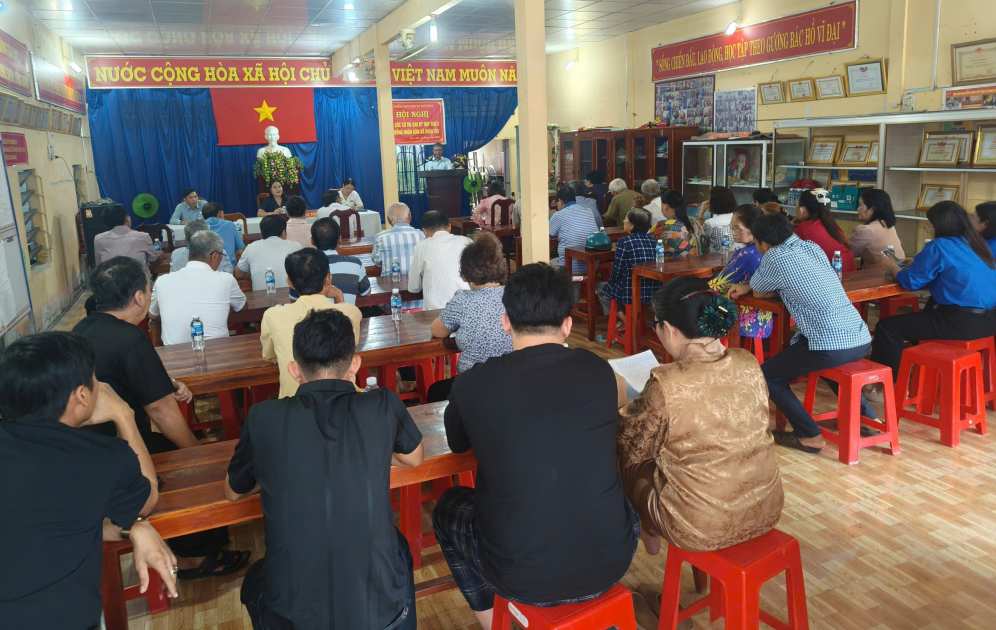
Image 3. Thoi Binh Commune People’s Council meeting with voters – Source: Thoi Binh Commune website
According to the plan, civil servants and public employees in Thoi Binh Commune will use the AI solutions in their actual working environment for approximately one month. Users will directly test the tools through specific tasks, such as searching for documents, looking up guidance, consolidating information and preparing reports. Their feedback will help the project development team assess how easy it is to use the tool, processing speed, accuracy and ability to meet professional requirements.
FPT’s pilot of AI assistants in Thoi Binh Commune represents a practical approach: starting with specific challenges, testing the technology in real work situations and evaluating it through users’ own experiences. Rather than limiting AI to technology centers or large-scale projects, FPT is gradually bringing the technology closer to local organizations. Following the pilot, the project development team will consolidate feedback, evaluate the results and identify areas for further improvement. These findings will provide a basis for the local authority to consider the next stage of implementation. If the model demonstrates its suitability and effectiveness, it could be considered for expansion to other organizations across Ca Mau Province.