 vi
vi
 en
en
 ja
ja



AI is entering a new phase of development. Enterprises around the world are moving beyond experimentation and beginning to deploy AI at scale as a long-term competitive advantage. In this context, AI Agents are emerging as the next generation of enterprise AI applications, capable of executing tasks, collaborating with human teams, and gradually transforming the way organizations operate.
At an event hosted by ASUS on July 3, Mr. Nguyễn Quang Minh, Director of the AI Consulting and Innovation Center (AI Lab) at FPT Smart Cloud, FPT Corporation, delivered the presentation: “Building Sustainable Value and Driving Enterprise Growth with AI Agents.” His presentation explored global AI trends, a practical framework for assessing enterprise AI maturity, and the AI Agent applications that FPT is bringing into real-world business operations.
AI Has Moved Beyond Experimentation to Become a Growth Engine for Enterprises
Opening the presentation, Mr. Nguyễn Quang Minh shared market data illustrating how rapidly AI is shifting from pilot projects to large-scale enterprise deployment.
According to McKinsey, companies with larger revenue scales are adopting AI significantly faster than their peers. High-performing organizations also allocate nearly five times more budget to AI, demonstrating that AI is increasingly viewed as a strategic investment rather than a standalone technology initiative.
AI is delivering measurable value far beyond IT. Organizations are seeing tangible benefits across software development, manufacturing, supply chain management, marketing, sales, and customer service. This reflects AI’s growing impact across the entire enterprise value chain, from operational optimization and cost reduction to business expansion and customer experience enhancement.
According to Mr. Minh, the key question for enterprises is no longer “Should we adopt AI?” but “How do we make AI a core capability that enables sustainable growth?”
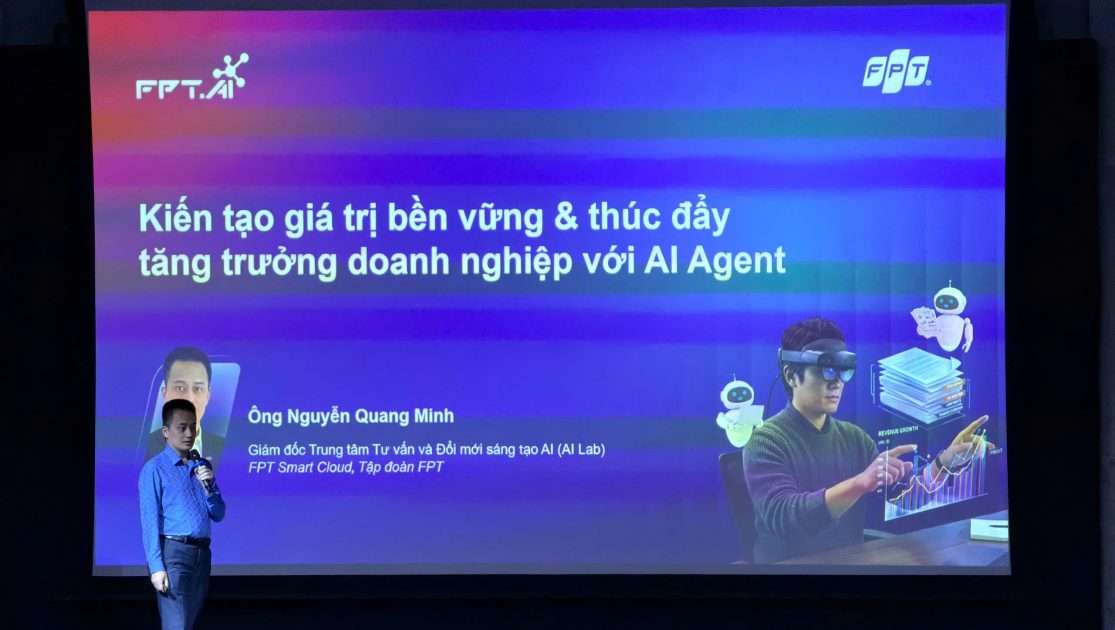
Image 1. Mr. Nguyen Quang Minh – Director of the AI Consulting and Innovation Center (AI Lab) FPT Smart Cloud, FPT Corporation
Successful AI transformation does not solely start with technology but with a clear roadmap
One of the central themes of Mr. Minh’s presentation was that many organizations have already adopted AI tools, yet implementation often remains fragmented. Different departments may use different AI solutions, but without a unified strategy or a consistent operating model.
To address this challenge, FPT has developed the CASAN methodology: an AI-Native capability framework designed to help enterprises assess their current level of AI maturity and build a structured roadmap for long-term transformation.
As Mr. Minh explained, becoming AI-Native is not an overnight process. Most organizations begin with small-scale experiments to understand AI’s potential before expanding it into employees’ daily workflows. As data and business processes become standardized, AI gradually becomes more deeply involved in operations, automating repetitive tasks under human supervision.
At more advanced stages, AI Agents move beyond assistance and become an operational workforce capable of executing business processes autonomously, coordinating across multiple enterprise systems, and enabling organizations to scale without increasing resources proportionally.
The ultimate goal of CASAN is an AI-Native enterprise, where AI is no longer an additional technology layer but the foundation for re–designing business processes, operating models, and value creation itself.
According to Mr. Minh, the fundamental shift is that organizations are no longer simply adding AI to existing systems; they are re–architecting the enterprise with AI at the core of operations.
AI Agents Require the Right Governance and Architecture
For AI Agents to operate reliably in enterprise environments, success depends not only on the AI model itself but also on the underlying architecture and governance framework.
During the presentation, Mr. Nguyễn Quang Minh introduced four foundational principles of CASAN. Human leaders remain responsible for final decision-making, while AI handles most execution tasks. AI operates within a controlled environment to ensure stability and reliability. Reasoning capabilities are integrated with existing business systems rather than operating in isolation. Finally, a multi-layered authorization model allows AI to execute tasks, make recommendations, or support decision-making depending on the level of permission granted.
These principles are implemented through a five-layer reference architecture consisting of the data layer, model layer, agent and tools layer, orchestration layer, and governance and security layer. According to Mr. Minh, this architecture provides the foundation for scaling AI Agents across the enterprise while maintaining control, compliance, and information security.
An AI Agent Ecosystem That Enables Organizations to become AI-Native
If CASAN provides the methodology, FPT.AI’s enterprise AI ecosystem provides the execution layer that turns strategy into operational reality.
Within the ecosystem, multiple AI Agents are designed to work together as a coordinated system rather than as isolated tools. Each Agent performs a specialized role while integrating with enterprise platforms such as CRM, ERP, and LMS to support end-to-end business workflows.
From handling customer requests and assisting employees with daily tasks to extracting insights from enterprise data and supporting workforce training and development, the ecosystem is designed so that AI can collaborate with both customers and employees across multiple business touchpoints.
According to Mr. Minh, the real value of the ecosystem is not reflected by the number of products it contains, but in the ability of multiple AI Agents to work together across an entire business process. Instead of managing disconnected AI tools, enterprises can build an AI workforce that collaborates with human teams, shares data, exchanges context, and executes work seamlessly across systems.
AI Agents Will Become the New Operating Force For Businesses
Closing the presentation, Mr. Nguyễn Quang Minh emphasized that AI Agents are not simply productivity tools. AI Agents will become a new operational workforce for enterprises in the years ahead.
To unlock that potential, organizations need a structured transformation strategy that begins with data, architecture, governance, and operating model design. Through the CASAN methodology and a comprehensive AI Agent ecosystem, FPT Smart Cloud provides enterprises with a clear roadmap for moving from isolated AI adoption to becoming a truly AI-Native organization, where AI serves as the foundation for sustainable growth and long-term innovation.