vi
vi
 en
en
 ja
ja



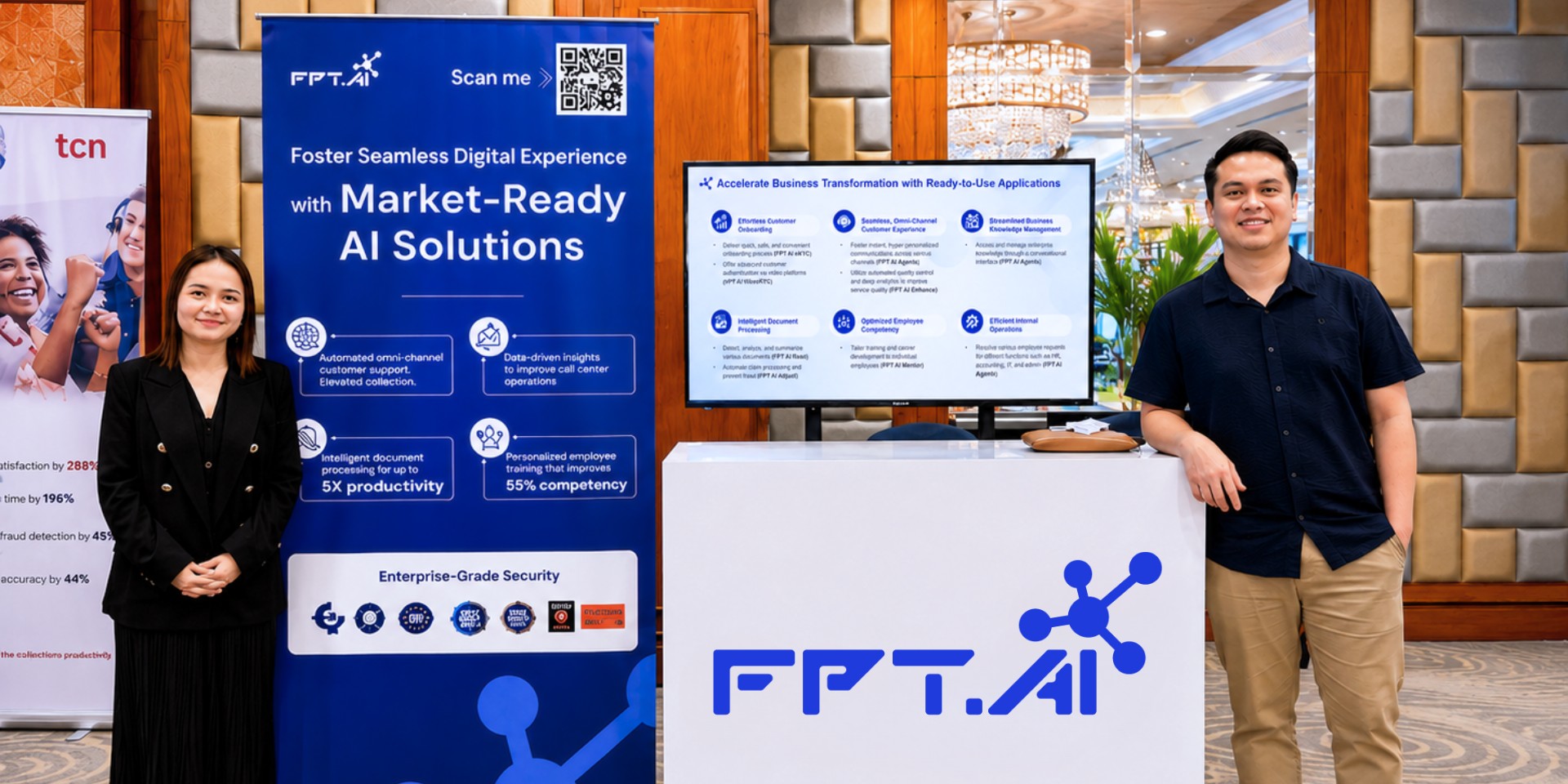
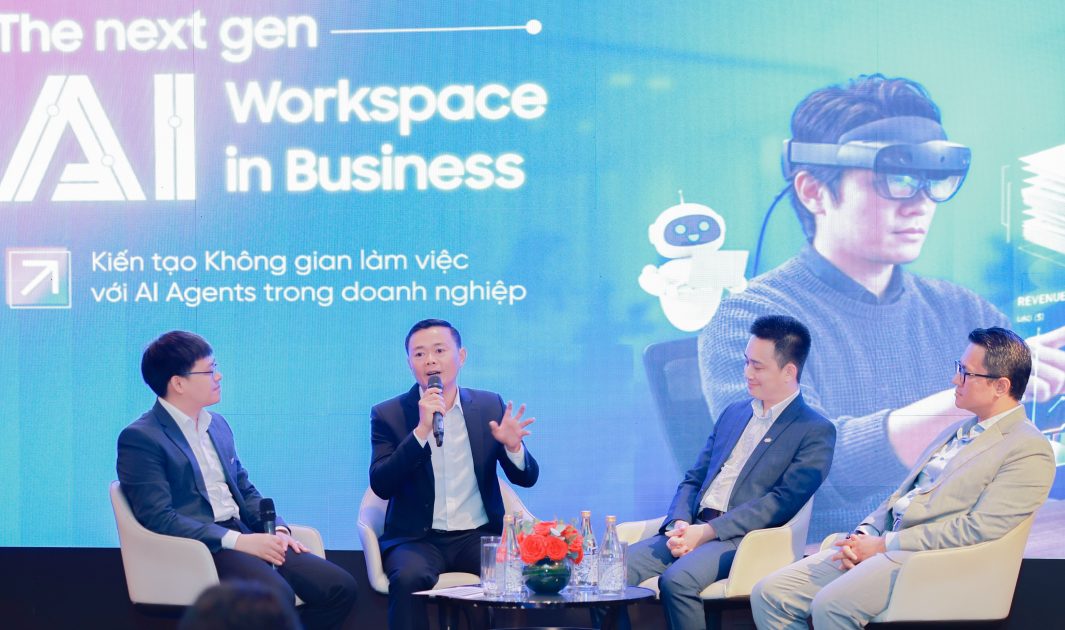
On the morning of April 10, the Exclusive AI Talk 2026 event took place, offering a comprehensive yet highly practical view of how AI is reshaping the workplace within enterprises. Moving beyond trend-driven discussions, the sessions went straight to the core challenge many organizations are facing: how to transform AI from a “technological promise” into a “real operational capability.
The AI race is accelerating
One of the most notable takeaways is the growing market pressure forcing businesses to act. According to Gartner and The Wall Street Journal, global AI investment is projected to reach approximately $2.5 trillion, while 68% of CEOs plan to continue increasing their AI spending in 2026, signaling that AI is no longer an experimental option, but a strategic priority.
Beyond expectations, AI is already proving its real-world value at a global scale. Since the launch of ChatGPT in late 2022, AI-related stocks have contributed around 75% of the total gains of the S&P 500, 80% of earnings growth, and 90% of capital expenditure growth. This underscores that AI is not just a technology wave, but a direct driver of operational efficiency and profit margins for businesses.
In this context, AI is creating a clear compounding effect. Mr. Nguyen Quoc Tuan, CEO of ScaleUP, noted that early adopters will continue to build advantages over time, while frontrunners accelerate further ahead of the rest. This is also why AI is seen as a long-term game—where companies that wait until ROI becomes fully clear before acting risk falling behind. In such cases, the cost of delay is not just missing opportunities, but can even exceed the initial investment required to implement AI early on.
From fragmented tools to an AI Workspace – a strategic shift for enterprises
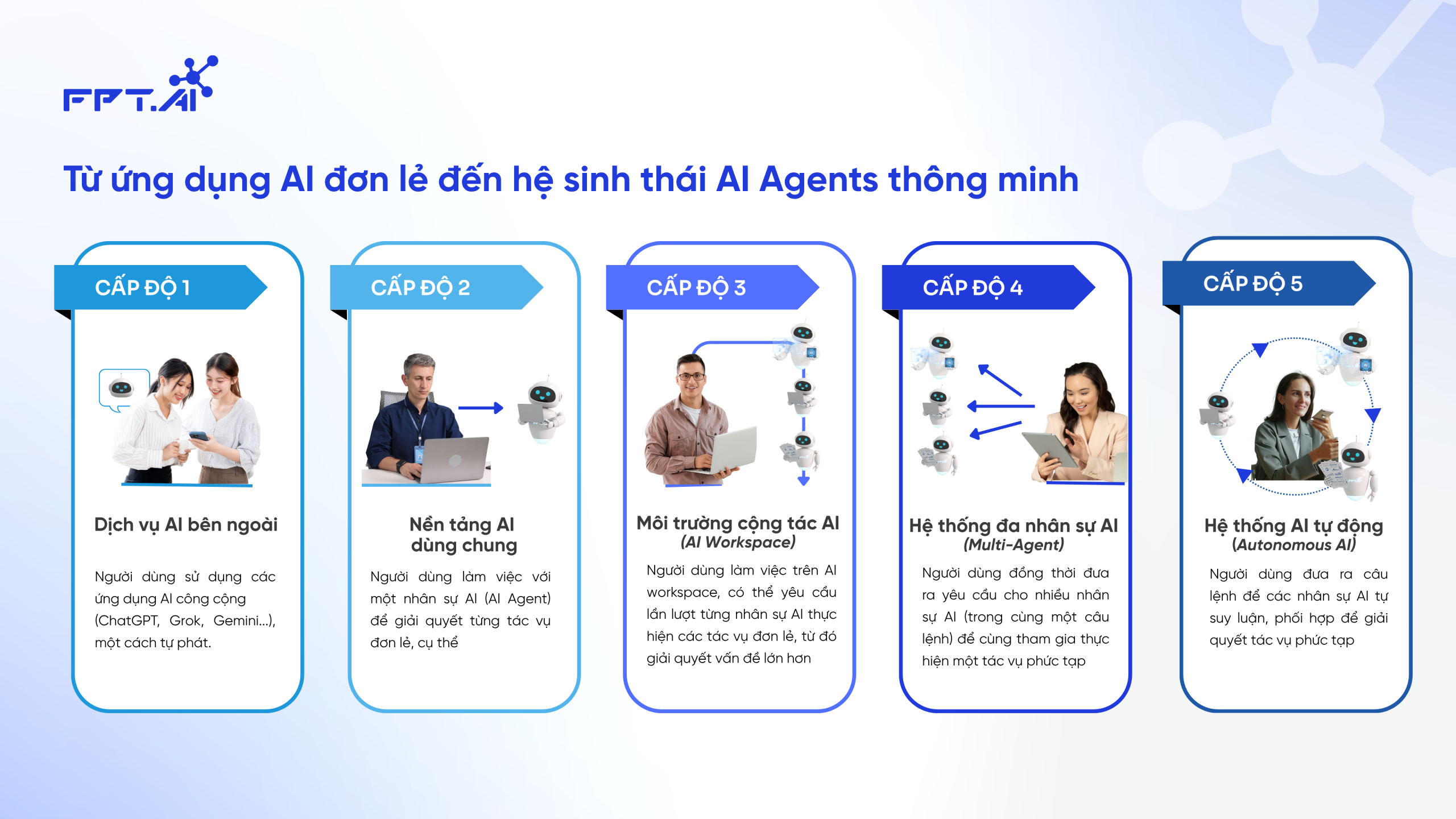
At the event, Mr. Nguyen Quang Minh – Director of the AI Consulting and Innovation Center (AI Lab) at FPT Smart Cloud, FPT Corporation – outlined a typical “evolution” journey in how enterprises adopt AI. It often begins with the fragmented, individual use of public AI tools. This is followed by a phase where organizations deploy standalone AI Agents, functioning as “digital workers” for specific tasks.
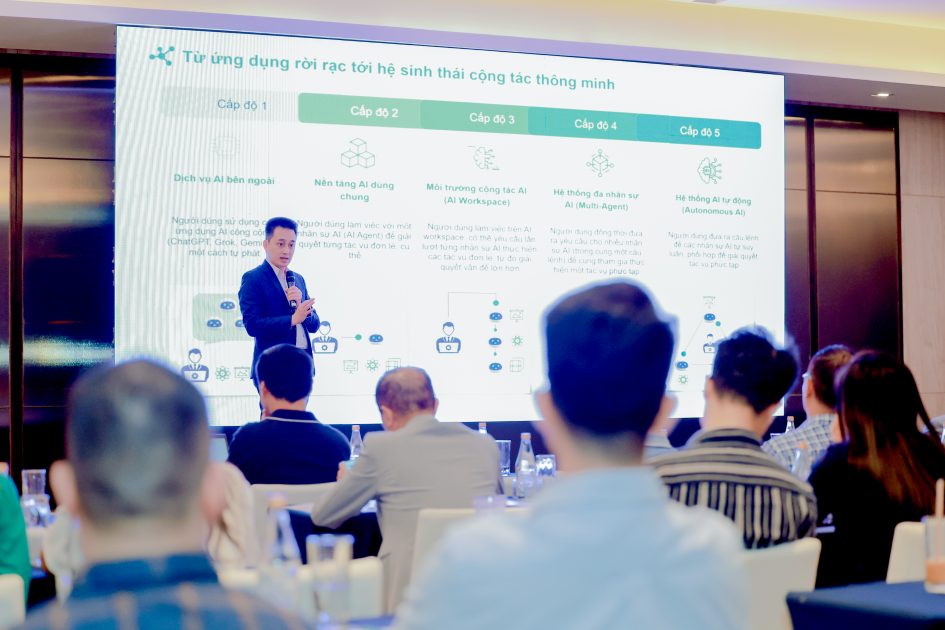
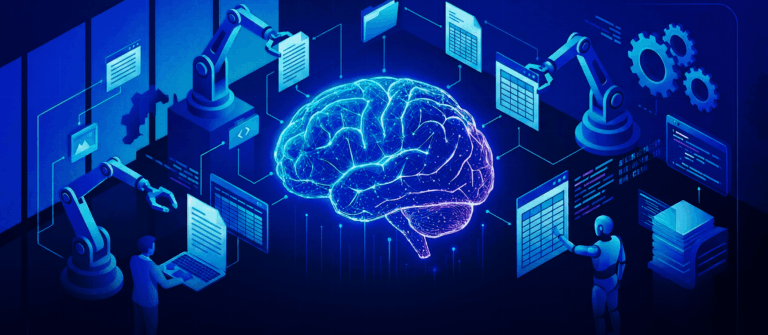
However, real value only begins to scale when enterprises transition to an AI Workspace model where multiple AI Agents can collaborate to solve more complex problems. At a more advanced level, multi-agent and autonomous AI models enable systems not only to execute tasks but also to reason, allocate work, and coordinate with one another toward shared goals.
This shift is not merely a technological upgrade, but a fundamental transformation in how businesses operate.
When AI becomes a new “workforce” within the enterprise
A key insight from the event is that AI is increasingly taking on the characteristics of a “worker” rather than just a tool. It can perform tasks, collaborate, and even make decisions in certain contexts. However, most organizations today still manage AI as an IT system, rather than as part of their organizational structure. This disconnect is a major bottleneck, preventing many well-funded AI initiatives from delivering proportional impact. In other words, companies are “using AI,” but not yet “operating with AI.”
Experts at the event emphasized that to bridge the gap between investment and outcomes, businesses need a more holistic approach. According to BCG, three pillars determine AI success: algorithms, technical infrastructure, and people–organization–process. Among these, the last is often the biggest constraint. AI does not fail because it lacks intelligence, but because it is deployed in systems that are not ready to absorb it. When data is unrefined, processes are not standardized, and people are unprepared, AI risks becoming an added layer of complexity rather than a driver of efficiency.
Vietnam’s challenge: Strong potential, but a lack of high-impact use cases
According to Mr. Nguyen Duc Hanh, CIO of Thien Long Group, the situation in Vietnam clearly reflects this gap. While interest and investment in AI are rapidly increasing, applications that directly impact revenue, cost efficiency, and operational speed remain limited. This highlights a significant gap—but also a major opportunity. Enterprises that move early in building high-impact use cases will gain a clear competitive advantage in the coming years.
From an implementation perspective, a practical approach highlighted at the event is to start with small but high-impact use cases—where outcomes can be clearly measured. This not only helps mitigate risks but also builds internal confidence to scale AI initiatives further.
At the same time, clearly defining objectives, selecting the right tools and partners, and ensuring clean, ready-to-use data are critical prerequisites. More importantly, organizations must be willing to adapt their processes to work effectively with AI, rather than holding on to legacy ways of working. Incorporating AI-related KPIs into performance evaluations and preparing dedicated teams for post-deployment operations are no longer optional—they are quickly becoming the new standard.
From “using AI” to “implementing AI effectively.”
In closing, a clear message emerged: in a landscape where trillions of dollars are being invested in AI but results remain uneven, the advantage will not belong to those who invest the most, but to those who understand and implement it effectively.
From this perspective, AI Workspace is not just a technology trend, but a new operating model—one where humans and “digital workers” collaborate to create real business value.