vi
vi
 en
en
 ja
ja



From demand forecasting in retail to fraud detection in banking and content creation in marketing, AI is being applied across industries to solve targeted, well-defined use cases. But at the enterprise level, a critical question emerges: can these AI systems truly work together?
When each AI system is implemented for a separate purpose, optimization often remains local. Data becomes fragmented, workflows are disconnected, and the value created is difficult to compound. This leads to a familiar state for many organizations: plenty of AI, but no unified AI system.
And that is the key boundary between applying AI to individual problems and building an ecosystem of AI Agents that can collaborate, share context, and operate as a cohesive whole.
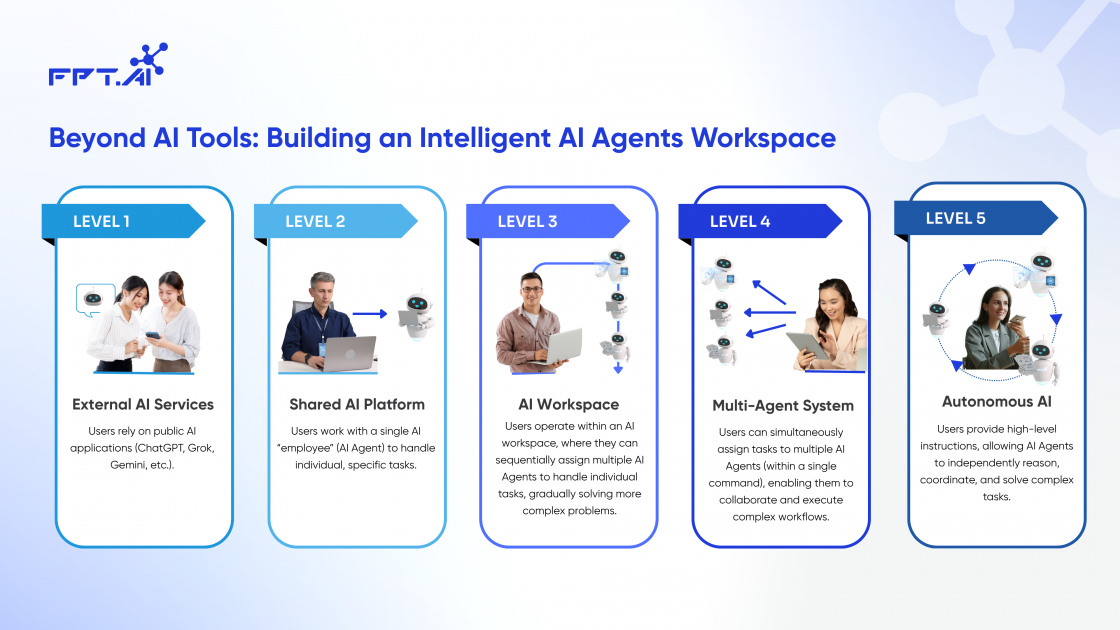
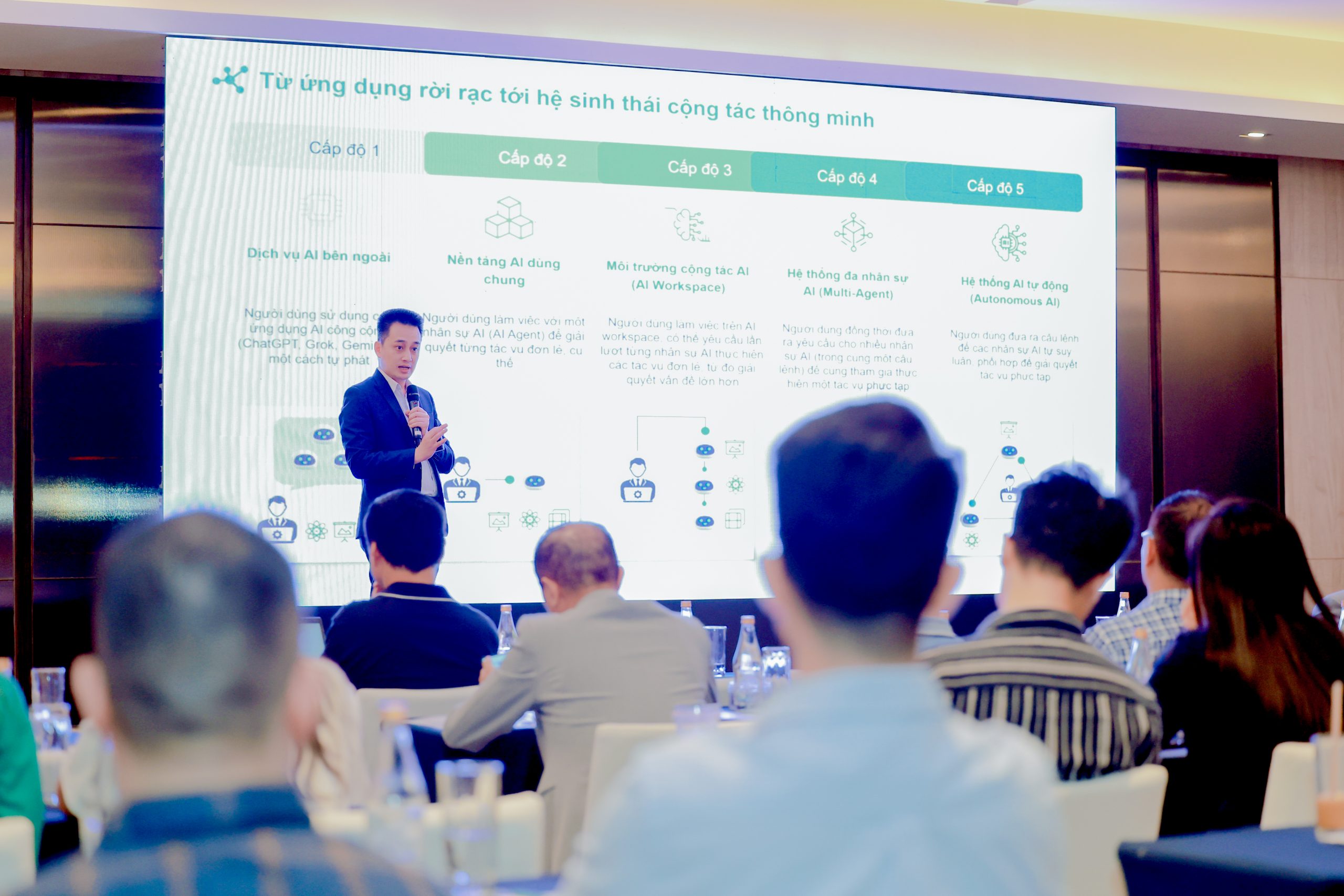
In the early stages, AI is typically deployed as standalone tools for specific needs such as content creation, data analysis, or customer support. From a technical perspective, this model relies on APIs or off-the-shelf platforms without deep integration into core systems. This allows businesses to experiment quickly with low cost and fast deployment. However, from a business standpoint, the value remains limited: data is fragmented, processes are inconsistent, and ROI is difficult to measure clearly.
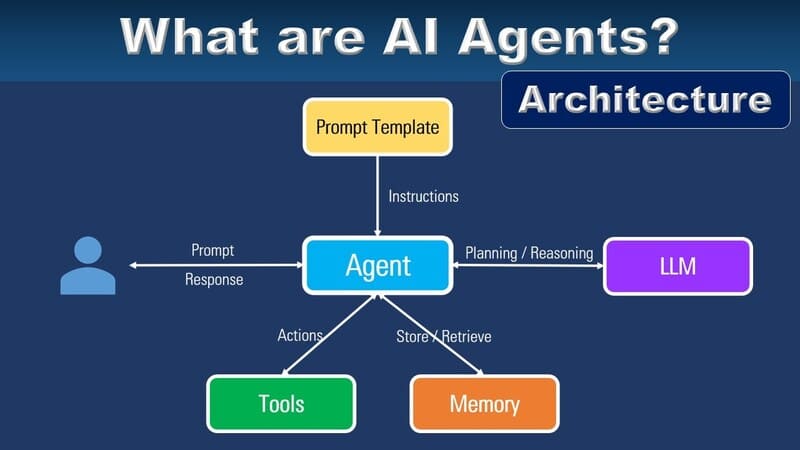
As AI adoption grows, organizations begin to standardize by implementing a shared AI Agent. Essentially, this serves as an intermediary layer that can understand context, access internal data, and support multiple tasks. Technically, this model often combines large language models (LLMs), knowledge bases, and basic workflows. Business benefits become more evident: reduced processing time, improved employee experience, and a unified AI access point. However, limitations persist in sequential processing and the lack of deep scalability across complex workflows.
A major shift occurs when organizations build an AI Workspace – a collaborative environment where humans and multiple AI Agents interact. This is not just an interface, but an integrated architecture where different AI capabilities can be invoked based on specific roles. Technically, AI Workspace requires orchestration capabilities, multi-session context management, and integration with enterprise systems such as CRM, ERP, and data warehouses. From a business perspective, this marks a turning point where AI begins to participate in end-to-end processes rather than isolated tasks, significantly improving productivity and consistency.
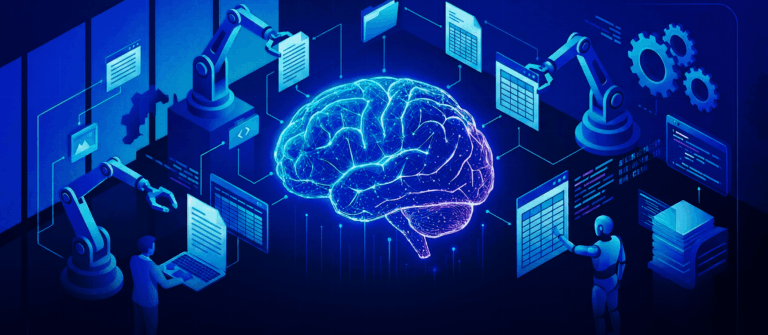
However, AI Workspace is not the final destination. The greatest value is unlocked when organizations move toward a multi-agent model. At this stage, each AI Agent is designed with a specialized role—such as data analysis, planning, quality assurance, or customer interaction. These agents do not operate in isolation; they collaborate, exchange information, and work together to solve complex problems.
From a technical standpoint, this represents a shift from a single-agent system to a multi-agent system, requiring components such as:
- Task decomposition to break down complex requests into smaller tasks
- Agent communication protocols to enable interaction between agents
- A central orchestrator or decentralized coordination model
- Evaluation and feedback loops to monitor and improve outcomes
From a business perspective, this model drives structural transformation. Organizations not only enhance individual productivity but also optimize the entire value chain. A complex request, such as launching a marketing campaign, can be handled almost entirely by an “AI team,” from market research and messaging to content execution. This reduces operational costs, shortens time-to-market, and enables large-scale experimentation.
At the highest level, systems evolve toward Autonomous AI—where AI Agents can reason, make decisions, and collaborate with minimal human intervention. Technically, this involves advanced reasoning models, reinforcement learning, and tight integration with real-time data. From a business perspective, this lays the foundation for the concept of a “self-operating enterprise,” where human roles shift from execution to supervision and strategic direction.
However, reaching this level requires overcoming significant challenges. Data must be standardized and cleaned to ensure accuracy. Technology infrastructure must be flexible enough to integrate and scale. At the same time, security, risk management, and compliance become increasingly critical. Equally important is the human factor, as organizations need to shift their mindset from “using tools” to “managing a digital workforce.”
Overall, the journey from standalone AI applications to an ecosystem of AI Agents is an evolution across different levels of maturity. Each step requires not only technological investment but also a transformation in how businesses design processes and measure performance. Organizations that move faster along this journey will not only reduce costs but also build sustainable competitive advantages in a world where speed and adaptability are decisive.
In this context, the key question is no longer “What can AI do?” but “How should organizations restructure their operations to fully leverage an AI ecosystem that can collaborate, share context, and operate as a unified system?”
Explore more about FPT AI Agents: https://fpt.ai/products/fpt-ai-agents/