 vi
vi
 en
en
 ja
ja



When Talent Retention Becomes a Strategic Priority
In today’s rapidly evolving labor market, talent retention has become more than a human resource (HR) responsibility; it is now a strategic business priority. Rising recruitment costs, longer onboarding periods, and increasing competition for skilled professionals mean that each resignation can have a significant impact on business performance.
For years, organizations have invested in compensation, benefits, and employee engagement programs. While these initiatives remain important, they often address only the symptoms rather than the root causes of employee turnover. What organizations need is the ability to understand each employee’s journey, identify early signs of disengagement, and take timely action before employees decide to leave.
This is where AI is becoming an essential part of modern workforce management strategies.
Why Are Employees Leaving?
Employee turnover is rarely driven by a single factor. More often, it is the result of multiple issues that accumulate over time, including:
- Limited learning and development opportunities.
- Unclear career progression.
- Unbalanced workloads.
- Insufficient recognition from managers.
- Workplace experiences that fail to meet expectations.
- A weakening connection to the organization’s culture.
The challenge is that these warning signs often emerge long before an employee resigns. Yet, they can be difficult to detect if organizations rely solely on periodic surveys or one-on-one conversations.
Enabling Proactive Talent Retention with AI
AI can collect and analyze data from multiple sources, including HRM systems, learning management systems (LMS), performance metrics, employee surveys, and collaboration platforms to comprehend employee experience.
Rather than recording employee turnover after it occurs, AI enables organizations to identify retention risks at an early stage. For example, AI can detect employees whose engagement is steadily declining, who participate less frequently in training, whose performance begins to drop, or who repeatedly explore internal career opportunities without receiving a response. When several of these signals appear simultaneously, the system can alert managers and HR teams, enabling them to proactively engage employees, provide support, or adjust development plans.
As a result, organizations shift from reacting after losing talent to preventing talent loss before it happens.
Personalizing the Employee Experience at Scale
One of the greatest challenges organizations face today is delivering personalized employee experiences to hundreds, or even thousands, of employees simultaneously.
AI addresses this challenge by creating individualized development journeys for every employee.
Instead of delivering the same training program to everyone, AI can:
- Recommend learning courses based on each employee’s role and capabilities.
- Identify the skills needed to achieve individual career goals.
- Create personalized learning pathways.
- Provide real-time learning reminders and guidance.
- Recommend suitable internal mobility and career development opportunities.
This is the value that FPT AI Mentor delivers to organizations. FPT AI Mentor acts as an AI-powered companion throughout each employee’s professional development journey.
The platform analyzes an employee’s role, current competencies, career objectives, and learning progress to create personalized development pathways. Each employee receives tailored course recommendations, learning materials, and assessments aligned with their individual needs, making learning more practical, continuous, and relevant to day-to-day responsibilities.
Beyond personalized learning, FPT AI Mentor supports employees throughout the learning process by enabling knowledge retrieval, answering questions, recommending additional learning content, and providing reminders to help employees stay on track with their development goals. This gives employees access to an AI mentor that continuously supports and guides their professional growth.
From a management perspective, organizations gain real-time visibility into employee competencies, skill gaps, learning progress, and effectiveness of training programs. These insights enable more informed and proactive workforce development decisions.
When employees recognize that their organization is genuinely investing in their growth and provides a clear pathway for career advancement, their engagement and commitment increase significantly. Ultimately, this strengthens an organization’s ability to retain talent in the long term.
AI Agents: A New Companion for Employees
While FPT AI Mentor focuses on capability development and personalized learning, the next generation of AI agents extends AI’s role by supporting employees throughout their daily work.
Instead of searching across multiple systems, employees can directly interact with AI agents to:
- Access internal processes and company policies.
- Retrieve professional resources.
- Support new employee onboarding.
- Answer questions related to benefits, leave policies, and insurance.
- Assist with daily work tasks.
- Recommend the next steps in business workflows.
This not only saves time but also reduces the workload of HR teams and managers while creating a more seamless employee experience.
Data-Driven Decision-Making for Managers
One of AI’s greatest strengths is its ability to transform workforce data into actionable insights.
Rather than solely relying on monthly or quarterly turnover reports, managers can monitor real-time workforce indicators such as:
- Employee engagement across departments.
- Workforce trends and turnover patterns.
- Training program effectiveness.
- Learning pathway completion rates.
- Attrition risks across employee groups and job roles.
These insights enable organizations to allocate resources more effectively while evaluating how HR initiatives influence employee retention.
Human Empathy Remains Irreplaceable
Although AI can analyze workforce data with remarkable accuracy, employee retention remains a human challenge.
AI cannot replace genuine conversations between managers and employees, nor can it replace an organization’s culture, meaningful recognition, or a leader’s ability to inspire and build trust.
Instead, AI’s can provide insights, deliver early warnings, and recommend appropriate actions, empowering managers to make faster and better-informed decisions. Ultimately, the combination of intelligent technology and human empathy creates a sustainable employee experience.
Toward a Sustainable Organization
Now, talent retention is no longer simply about reducing employee turnover. It is about creating a workplace where every employee feels heard, supported, and empowered to grow.
From predicting attrition risks through workforce analytics and personalizing learning journeys with FPT AI Mentor to supporting employees in their daily work through AI agents, AI is reshaping how organizations design and deliver the employee experience.
When implemented effectively, AI improves workforce management while helping organizations build a more agile, engaged, and resilient workforce capable of sustaining long-term growth.
Over the past few years, the rise of generative AI has transformed how businesses search for information, create content, and automate workflows. Yet, despite the rapid advancement of AI models, most still face a fundamental limitation: AI does not fully understand the organizations they are designed to serve.
While a chatbot can answer questions using publicly available data, an AI agent can assist in solving complex tasks and automating workflows. However, when asked about internal processes, company-specific policies, customer records, or past business decisions, AI still lacks a comprehensive understanding of their organizations.
This is where Enterprise AI Memory becomes an important foundation for deploying AI effectively in enterprise environments.
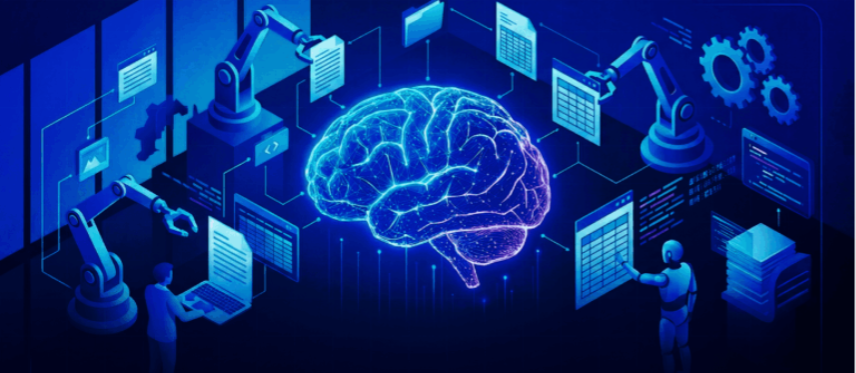
Image 1. Enterprise AI Memory preserves organizations’ knowledge into a unified memory system.
What Is Enterprise AI Memory?
Enterprise AI Memory is a system that stores, organizes, and connects an organization’s collective knowledge so that AI systems can retrieve, retain, and apply it whenever needed.
Unlike traditional systems that only store information, Enterprise AI Memory serves as an organization’s long-term memory, enabling AI to understand:
- Internal business processes and workflows.
- Company policies and compliance requirements.
- Customer interaction history.
- Domain expertise built over years of operations.
- Past decisions, institutional knowledge, and experiences.
In other words, Enterprise AI Memory enables AI to understand not only publicly available data but also the organization’s own institutional data.
When Business Data is Fragmented
Nowadays, enterprise knowledge is often spread across emails, CRM platforms, project management tools, internal knowledge bases, messaging applications, and countless other systems.
As organizations grow, so does the volume of information. Instead of becoming more valuable, that knowledge often becomes increasingly difficult to access. Employees spend hours searching for information, while departments continue operating within isolated data silos. More importantly, organizations risk losing valuable institutional knowledge when experienced employees leave.
In this environment, AI can only deliver meaningful business value if it is able to access, connect, and reason across these fragmented knowledge sources through a unified enterprise memory.
From AI Chatbots to AI Agents: Why Memory Matters More Than Ever
Early-generation chatbots primarily responded to a user’s current query. However, today’s AI agents can execute complex multi-step tasks, proactively recommend actions, collaborate with enterprise systems, and support decision-making.
To accomplish this, AI agents rely on far more than real-time data. They also depend on the ability to retain historical context and enterprise knowledge.
For example:
- A sales representative asks an AI assistant for the history of interactions with a customer. The AI needs to recall previous conversations, signed contracts, recent feedback, and pending action items.
- A customer service representative requests assistance in resolving a complaint. Rather than relying solely on the current conversation, the AI must understand the customer’s complete journey across multiple interactions.
As organizations deploy more AI agents across business functions, Enterprise AI Memory becomes the core foundation that enables these agents to operate consistently, intelligently, and with full organizational context.
Enterprise AI Memory as the Next Competitive Advantage
During the early stages of AI adoption, organizations that adopted AI early had a competitive advantage. However, as foundation models become increasingly powerful, widely available, and easier to adopt, the technology gap between businesses continues to narrow. Competitive differentiation will no longer depend on the AI model itself, but on the data and knowledge that AI can leverage.
Organizations with a well-developed Enterprise AI Memory will be able to:
Make faster, better-informed decisions:
By instantly retrieving information from multiple enterprise systems, AI enables leaders and employees to access the right knowledge at the right time.
Improve workforce productivity:
Employees no longer need to spend valuable time searching for documents or consulting colleagues. AI becomes a centralized knowledge gateway for the entire organization.
Reduce dependency on individual expertise:
Critical business knowledge is no longer confined to a handful of experienced employees. Instead, it becomes a shared organizational asset that remains accessible, even as employees join, leave, or change roles.
Enhance AI performance:
Organizations with a well-developed enterprise memory will receive responses that are significantly more accurate and more context-aware.
The Future of Enterprise AI: “The Digital Brain”
Soon, Enterprise AI Memory will evolve beyond a knowledge repository to become the coordination layer of organizations’ entire ecosystem of AI agents.
Every meeting, customer interaction, and newly created document will continuously enrich the organization’s memory. Over time, AI will learn from this expanding knowledge base, enabling it to provide increasingly intelligent and context-aware support.
Organizations will gradually build a “digital brain” capable of preserving, connecting, and leveraging their collective knowledge across every business function.
In the AI era, access to powerful language models is no longer a unique competitive advantage. Sustainable differentiation will come from an organization’s ability to transform its internal data and institutional knowledge into strategic assets that AI can effectively understand and leverage. Enterprise AI Memory provides the foundation that makes this possible.
As AI adoption accelerates across industries, manufacturing is shifting beyond traditional automation toward more autonomous and adaptive AI systems. Unlike generative AI, which typically relies on prompt-by-prompt user interactions, AI agents can analyze data, develop plans, make decisions, and independently complete multi-step tasks to achieve specific business objectives.
Advances in Generative AI, Large Language Models (LLMs), and enterprise data infrastructure have made AI agents capable of supporting complex manufacturing operations. Today, manufacturers no longer expect AI to only answer queries or act as basic assistants; they want AI to seamlessly coordinate with ERP, MES, IoT, SCADA, and other management software to automate complex processes and minimize human intervention.
Within modern factories, AI agents function as digital coordinators that continuously monitor real-time operational data, identify anomalies, generate recommendations, and initiate appropriate actions automatically. The result is higher productivity, lower operation costs, improved product quality, and greater agility in responding to changing market conditions.

Below are eight practical AI agent applications that manufacturers are currently exploring and implementing.
Predictive Maintenance: Reducing Unexpected Downtime
Unexpected equipment failures can disrupt production lines and result in significant financial losses. AI agents enable manufacturers to move from scheduled maintenance toward predictive maintenance by continuously analyzing data, such as temperature, vibration, pressure, and electrical current.
When an anomaly is detected, the AI agent can:
- Alert maintenance teams before failures occur.
- Assess the severity of issues and prioritize maintenance accordingly.
- Recommend or automatically schedule maintenance activities.
- Verify spare part availability and request re-purchase if necessary.
By anticipating equipment failures before they happen, manufacturers can minimize unplanned downtime while sustaining equipment lifespan.
AI Vision for Quality Control
Combined with industrial cameras and computer vision technologies, AI agents can inspect product quality in real time with high speed and accuracy.
Beyond identifying surface defects, dimensional inaccuracies, or missing components, AI agents can also:
- Classify defects based on severity.
- Identify manufacturing stages where defects are most likely to occur.
- Analyze defect rates across production lines or production shifts.
- Recommend process improvements to reduce product defects.
Automated inspection improves consistency while reducing human error throughout the quality control process.
Intelligent Production Planning and Scheduling
Production planning requires balancing customer demand, equipment capacity, workforce availability, and material supply. AI agents evaluate information from multiple systems to:
- Generate optimized production schedules.
- Allocate resources across manufacturing lines.
- Adjust production plans in response to urgent orders or equipment failures.
- Minimize waiting times while maximizing production capacity.
With continuous analysis and optimization, AI agents help manufacturers respond more quickly to changing market demand.
Inventory and Material Management
Excess inventory increases storage costs, while material shortages can interrupt production. AI agents continuously monitor inventory alongside production schedules and past material usage data to:
- Forecast material demand.
- Identify risks of overstocking or shortages.
- Recommend optimal purchasing times.
- Automatically generate procurement requests according to company workflows.
This enables manufacturers to balance inventory costs while maintaining uninterrupted production.
Training Engineers and Employees with AI Mentor
As a highly specialized field, the training process for personnel in the manufacturing industry takes significantly more time than in many other industries. AI-powered learning solutions help shorten onboarding periods and improve the overall learning experience for factory employees
Mishima Kosan, one of Japan’s leading manufacturing companies, recently adopted FPT AI Mentor, providing employees with personalized training programs. Training programs are accessible on smartphones, enabling employees to learn at any time and in any location.
A key strength of the solution lies in its ability to combine FPT-developed Large Language Models (LLMs) with industry-specific expertise. This enables AI Mentor to adapt to each organization’s unique operational processes and workplace culture.
Designed as a continuously evolving learning system, AI Mentor improves through real-world usage. Employees can provide direct feedback; for instance, by reporting inaccurate responses, which allows the system to continuously incorporate practical knowledge and operational experience from its users. As a result, the platform becomes increasingly intelligent and better aligned with the organization’s evolving needs.
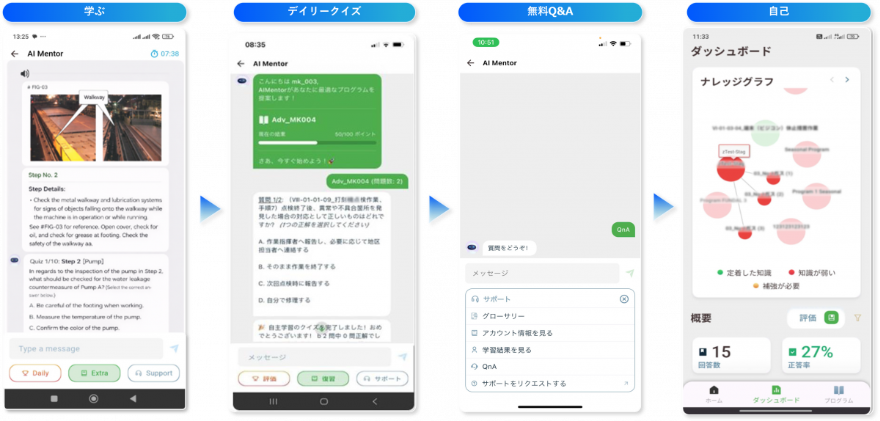
Image 2. FPT AI Mentor’s Japanese user interface
Energy Monitoring and Operational Cost Optimization
Electricity, water, compressed air, and fuel represent significant operating expenses for many manufacturers. AI agents continuously analyze energy consumption to:
- Identify underperforming equipment.
- Detect machines operating under prolonged overload conditions.
- Analyze abnormal energy consumption patterns.
- Recommend cost-effective solution to reduce operating costs.
These insights help manufacturers improve energy efficiency without compromising production performance.
Supply Chain and Logistics Management
AI agents can monitor material supply, production progress, and delivery schedules across the entire supply chain. When potential delays or supply disruptions are identified, the system can:
- Assess the impact on production schedules.
- Recommend operational adjustments.
- Suggest alternative suppliers or resource reallocation.
- Notify relevant departments to coordinate timely responses.
This enables manufacturers to reduce supply chain risks while maintaining stable operations.
Automated Reporting and Decision Support
Manufacturing managers often spend considerable time gathering and analyzing information from multiple systems before making operational decisions. AI agents automate reporting across key performance indicators, including:
- Production output by shift or production line.
- Product defect rates.
- Equipment utilization.
- Production progress by order.
- Operational metrics such as Overall Equipment Effectiveness (OEE) and production KPIs.
AI agents go beyond presenting data. They identify root causes behind performance changes, detect emerging trends, and recommend actions that improve operational efficiency and decision-making.
Conclusion
AI agents are initiating a new phase of manufacturing, where AI not only supports employees but also actively collaborates, analyzes information, and executes complex operational workflows. From predictive maintenance and quality control to production planning, supply chain management, and decision support, these applications enable manufacturers to improve productivity, optimize costs, and strengthen resilience in an increasingly competitive market.
As enterprise data and digital infrastructure continue to mature, AI agents are expected to become a core component of the smart factory. By enabling more intelligent, adaptive, and autonomous operations, they will play an important role in helping manufacturers build flexible, efficient, and sustainable production environments.
- With more than 100 years of history, Japan’s leading manufacturing company has chosen FPT AI Mentor to digitalize its training processes and enhance learning effectiveness through:
- – Personalized learning paths, enabling employees to learn anytime, anywhere
- – Multilingual support in Japanese, English, Myanmar, and more
- – Deep understanding of organizational culture and business context, powered by advanced AI capabilities
- 👉 Discover Mishima Kosan’s journey with FPT AI Mentor toward a future-ready workforce.
AI systems are most effective when they reflect the people and environments they are built to serve.
Models often fail not because they lack parameters, but because they lack context. Personas provide a structured representation of the people AI systems are intended to serve, helping developers train, evaluate, and adapt models for specific populations and tasks.
For developers and businesses building AI in Vietnam, that means training and evaluating models on data that reflects Vietnam’s own population, language, and social context rather than relying solely on generalized global datasets.
FPT, in collaboration with NVIDIA, is releasing Nemotron Personas Vietnam Datasets: 900,000 synthetic personas grounded in Vietnam’s official demographic and labor statistics and made openly available on Hugging Face.
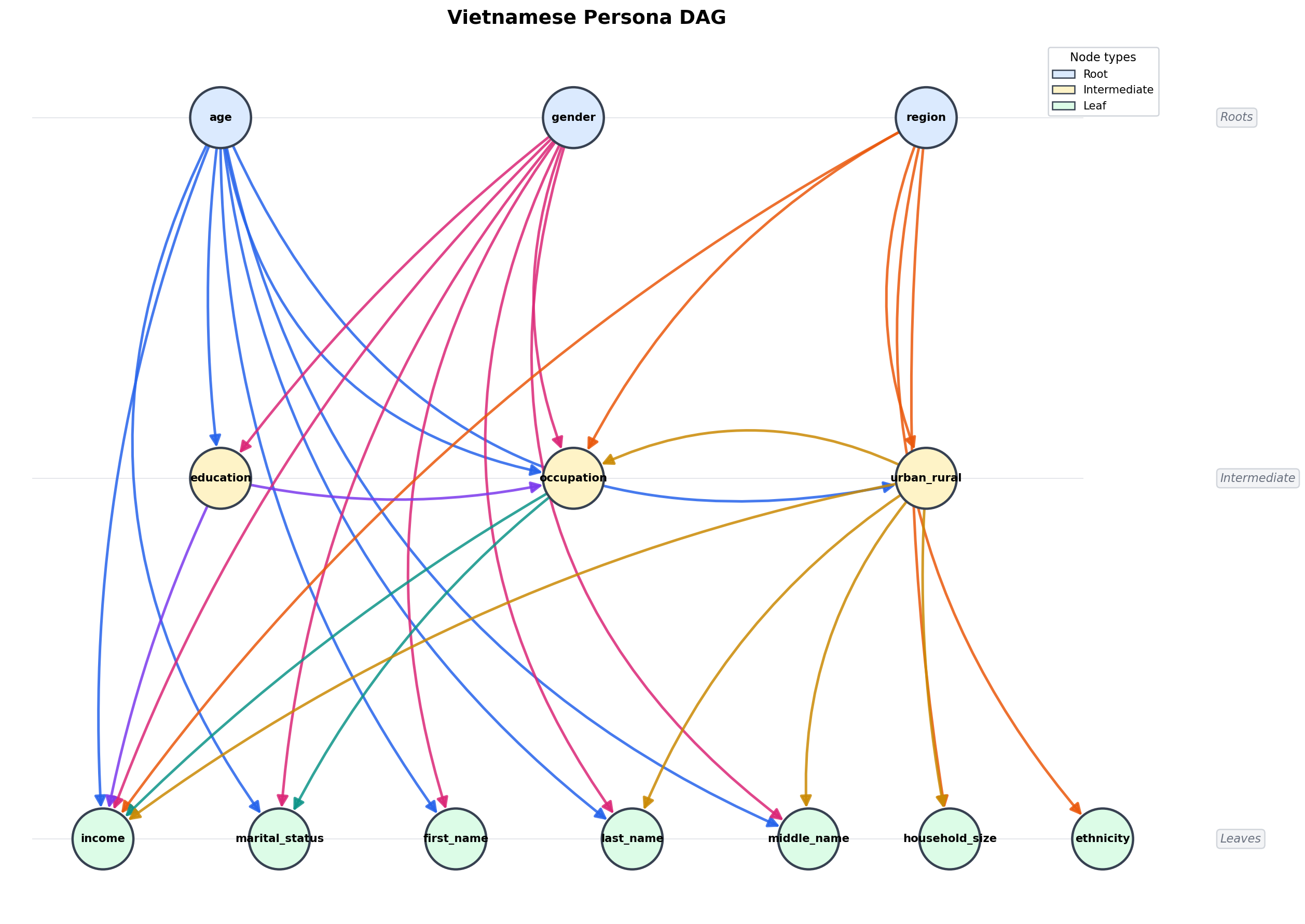
Dataset at a Glance
Nemotron-Personas-Vietnam dataset extends NVIDIA Nemotron-Personas methodology, a structured framework for building population-scale synthetic datasets that are auditable, grounded in demographic data, and designed for real-world AI development.
The original framework uses a Probabilistic Graphical Model (PGM) to anchor persona generation in real-world statistics, while open-weight LLMs generate high-fidelity personal narratives.
Unlike prompt-generated synthetic profiles, Nemotron-Personas are grounded in a PGM that preserves relationships between demographic variables such as age, occupation, education, income, and region, ensuring personas reflect real population patterns rather than random generation.
For the Vietnam dataset, FPT grounds the framework in two authoritative local sources: the Statistical Yearbook of Vietnam 2024 and Vietnam’s post-consolidation administrative boundary map. These sources serve two roles: (1) aligning the generated personas with Vietnam’s real population structure (by province, gender, and age), and (2) filling gaps where FPT’s data does not cover all demographic groups sufficiently. In turn, FPT’s data captures relationships between attributes – age, education, income, occupation, and marital status – that government statistics alone cannot provide.
Because the dataset is generated from documented public sources and an explicit generation pipeline, developers can inspect, reproduce, and adapt the methodology for their own regions and use cases.
The dataset includes 900,000 synthetic personas spanning 31 structured fields, including 9 personas, 6 persona attributes, 15 contextual attributes, and 1 unique identifier:
| Dimension | Category Level |
| Occupation | 20 |
| Age | 73 |
| Income | 7 |
| Education | 7 |
Beyond structured fields, each persona includes rich narrative attributes such as career_goals_and_ambitions, skills_and_expertise, hobbies_and_interests, cultural_background, sports_persona, culinary_persona, and more, helping developers build and evaluate models against more realistic Vietnamese user profiles.
Sample Record
Let’s take a closer look at how the dataset works in practice.
{"age": "50-64","marital_status": "da_ket_hon",
|
Consider Vũ Hồng Xuân: a 55-year-old retired educator in Ho Chi Minh City, with a university degree, a monthly income of 20–35 million VND, and a household of two. Her structured fields alone are sufficient to place her within a well-defined demographic segment. The narrative fields, however, are where the dataset’s value becomes more apparent. Her skills_and_expertise – retirement fund management, personal financial planning, investment advisory – indicate a financially literate individual with long-term asset considerations. Her hobbies_and_interests and professional_persona point to an active social life and community engagement, characteristics that bear on spending behavior and channel preferences.
For a banking model, this combination of attributes enables a more precise product recommendation than income bracket alone would allow, distinguishing her, for instance, from a younger professional at the same income level with an entirely different risk profile and financial horizon.
Built for Vietnam’s Researchers, Developers, and Enterprises
The dataset supports training, evaluation, benchmarking, red teaming, and agent development workflows across the AI lifecycle.
- LLM training and instruction tuning: Enhance model performance by incorporating diverse personas that improve response diversity, instruction adherence, and adaptability across a wide range of tasks
- Safety, security, and benchmark evaluation: Conduct red teaming, simulate phishing and social engineering scenarios, build benchmark datasets, and evaluate model behavior without relying on real user data.
- Prototyping for regulated industries: Support organizations in sectors such as finance, healthcare, and government with representative population simulations for AI model evaluation, bias assessment, and fairness testing
- Agentic AI and simulation: Create specialized agent personas, simulation environments, and evaluation benchmarks for agentic workflows grounded in realistic Vietnamese users and organizations.
Within Vietnam’s AI landscape, the market demand is clear. The country is actively promoting digital transformation, with official targets for the digital economy to reach 20% of GDP by 2025 and 30% by 2030. This increases demand for data-driven customer understanding, segmentation, and personalization [1].
Across banking, finance, healthcare, insurance, retail, and public services, organizations increasingly need realistic persona data for product testing, service personalization, simulation, and AI model evaluation [2, 3].
After more than a decade of AI development and implementation for Vietnamese enterprises, FPT witnesses two sectors standing out for immediate impact.
Banking – Finance
Vietnam’s population spans a wide range of financial literacy levels, income brackets, and attitudes toward formal banking that generic models often fail to capture accurately. Nemotron Personas Vietnam datasets give organizations structured personas to train and evaluate telesales models by income segment and communication style, and evaluate credit scoring models across different demographic groups across diverse customer profiles.
Retail
Consumer behavior across Vietnam’s regions, from the northern highlands to the Mekong Delta, differs substantially in purchasing power, product preferences, and cultural context. The dataset enables more accurate customer segmentation, recommendation engine tuning that better reflects behavior beyond major urban and high-income segments, and behavioral simulation for new market entry decisions.
As Vietnam continues investing in sovereign AI capabilities, localized datasets will play an increasingly important role in helping organizations build AI systems that are both technically capable and contextually relevant. Nemotron Personas Vietnam datasets are designed to support that effort with open, developer-ready resources grounded in Vietnamese reality.
The dataset is released openly on HuggingFace under a permissive license and is compatible with NVIDIA NeMo libraries.
————
Reference:
[1] https://www.mpi.gov.vn/en/Pages/2024-10-11/Digital-transformation-in-businesses-for-a-sustainegpc5n.aspx
[2] https://vietnamnews.vn/economy/1725975/banking-industry-needs-data-driven-customer-centric-breakthrough-experts.html
[3] https://b-company.jp/digital-transformation-in-the-healthcare-sector-in-vietnam
Hanoi, Vietnam – [June 4, 2026] – FPT Corporation and NVIDIA today announced the release of the Nemotron-Personas-Vietnam dataset to advance sovereign AI development across Southeast Asia. The dataset is open for commercial use, giving developers, researchers, and enterprises access to an open, auditable dataset designed to help build AI systems that better reflect Vietnam’s language, culture, workforce, and economic realities.
Nemotron-Personas Vietnam extends NVIDIA’s open Nemotron ecosystem of models, datasets, evaluation resources, and NVIDIA NeMo libraries, enabling developers to customize, evaluate, and deploy AI systems for local use cases.
Equipping Innovators to Build AI That Reflects Local Realities
The collaboration between FPT and NVIDIA is driven by a shared goal: to give AI innovators open, efficient models, datasets, and libraries to adapt their AI systems so they reflect local language, culture, regulations, data infrastructure, and economic goals, rather than relying on globally generic models that fail to serve specific communities.
NVIDIA contributes the open model framework, NeMo Data Designer synthetic data library, and the Nemotron-Personas methodology – a structured approach to building population-scale synthetic datasets that are auditable, demographic-grounded, and developer-ready.
FPT, as an NVIDIA Preferred Partner, contributed deep local expertise, validation methodologies, data infrastructure, and AI research capabilities through three key entities:
- FPT Smart Cloud: Provides the NVIDIA-accelerated GPU cloud services and inference-ready AI platforms that underpin the dataset’s development and deployment.
- Quantum AI and Cyber Security Institute: Provides research expertise and capabilities, leading the technical methodology and validation of the Nemotron-Personas-Vietnam dataset.
- FPT DC5: Operates field survey, contributing survey-collected persona data and logistical resources to the data pipeline.
Grounding AI in Vietnam’s Language, Demographics, and Labor Reality
Nemotron-Personas Collection extends NVIDIA’s Nemotron model family with population-scale synthetic datasets grounded in real-world demographic and labor statistics. These are structured, auditable datasets that mirror how people actually live, work, and communicate.
The Nemotron-Personas-Vietnam dataset applies this methodology to Vietnam, capturing the linguistic diversity, demographic breadth, and labor characteristics specific to the Vietnamese population.
The Nemotron-Personas-Vietnam dataset comprises 900,000 synthetic personas grounded in the country’s latest official statistics and geographic structure. Each record contains 31 fields, including 9 personas, 6 persona attributes, 15 contextual attributes, and 1 unique identifier, giving developers precise control to filter and target specific population subsets. It is available open-source on HuggingFace and is compatible with NVIDIA NeMo libraries across the full AI development lifecycle, from data curation and fine-tuning through post-training and deployment.
“FPT believes that sovereign AI must be built from the ground up to reflect local language, culture, and economic realities. The Nemotron-Personas-Vietnam dataset represents our commitment to making localized AI development openly accessible for every innovator building AI solutions for Vietnam and the broader region,” said Associate Professor Dr. Ngo Xuan Bach, Director of AI Product Center, FPT Smart Cloud, and Director of the Quantum AI & Cyber Security Institute, FPT Corporation.
Putting Sovereign AI Into Production, At Scale, In-Country
Sovereign AI is especially important for countries and industries where generic models are not enough to meet specific goals. Nations need AI that speaks their language, understands their laws, and fits their local context. Building and deploying sovereign AI in-country requires a robust AI cloud platform equipped for accelerated computing and inference at scale.
Guided by the vision of “Build Your Own AI,” FPT is deeply committed to the mission to master AI technologies and empower AI innovators to train and deploy AI within the regional boundaries through three integrated layers:
- NVIDIA-accelerated GPU Cloud services offering the compute foundation for training and running large-scale AI models in-region
- Inference-ready AI platforms giving necessary tools to deploy frontier AI models at scale
- Ready-to-use AI applications bringing sovereign AI capabilities directly to Vietnamese businesses and institutions
Together, these layers form a complete sovereign AI stack, from raw data and open models to deployed, localized AI products, built for Vietnam and replicable across the region.
As the global manufacturing industry accelerates digital transformation and adopts AI to enhance competitiveness, Mishima Kosan, a leading Japanese manufacturing enterprise, is making significant strides in improving employee competency and global talent management with FPT AI Mentor.
Mishima Kosan and the Workforce Training Challenge in Manufacturing
Mishima Kosan has over 2,500 employees across Japan and Myanmar. With a large workforce, high professional requirements, and geographically dispersed locations, the company has faced significant challenges in workforce training and knowledge transfer, bearing substantial time and cost pressure.
Traditional training methods like centralized training (OFF-JT) and on-the-job training (OJT) require employees to spend at least 6 months to master knowledge, making it difficult to continuously update knowledge and optimize workforce operations.
“One of the major challenges in these operations is the time required to acquire site-specific skills with specialized terminology and strict safety and quality standards. It often takes six months to a year, or even longer, for new employees to become fully operational. This results in significant training costs and has remained an ongoing operational challenge,” stated Mr. Yoshifumi Mizomoto, Senior Executive Officer, Mishima Kosan.

FPT AI Mentor – An AI Workforce to Support Every Employee
Employees can easily learn with FPT AI Mentor through personalized programs on their smartphones, at any time and location.
“Especially, the learning format through quizzes provides very high effectiveness as it creates a game-like feeling while providing immediate feedback, helping learners absorb and retain knowledge more naturally. We can also proactively review procedures on our phones before performing actual work, thereby significantly improving training effectiveness and job readiness,” shared Mr. Hiroshi Ishii, Shift Supervisor, Thick Plate Section, Mishima Kosan.
Aside from an enjoyable learning experience, FPT AI Mentor is equipped with multi-language capabilities. Employees can easily select learning materials and tests in their mother tongues.
As a direct user of FPT AI Mentor, Mr. Cho Cho We, Thick Plate Section, Mishima Kosan, shared: “I come from Myanmar and previously had to spend a lot of time translating and understanding Japanese instruction materials. With FPT AI Mentor, I can now accurately check complex procedures and safety regulations in my own language. The most useful thing for me is being able to quickly find answers right on my smartphone.”
Notably, FPT AI Mentor can flexibly adapt to the specific work culture and complex operational processes of each organization. Users can even provide direct feedback, such as marking “this answer is incorrect.” The system then absorbs additional knowledge and practical experience from the workforce, continuously evolving to better fulfill operational needs.
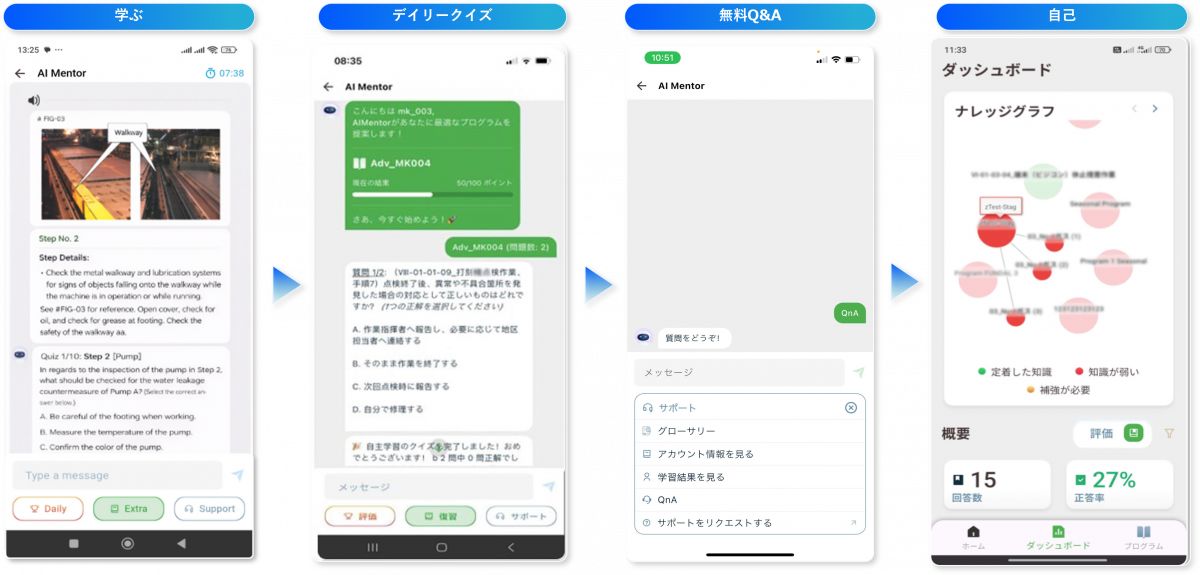
Additionally, FPT AI Mentor serves as a centralized training management system, allowing administrators to easily create, update, and manage training materials while monitoring the entire learning process on a unified platform. Enterprises can make more accurate decisions in workforce allocation, skill development, and training planning through a real-time, data-driven evaluation system, building training processes with compliance orientation and ensuring operational consistency.
Combining Technological Power with Deep Industry Expertise
The combination of global deployment capabilities, Japanese large language model (LLM) developed by FPT.AI, and Mishima Kosan’s long-standing domain expertise creates an optimal AI solution for workforce challenges in manufacturing.
According to Mr. Ho Minh Thang, Deputy Director of AI Product Division, FPT Smart Cloud, FPT Corporation: “Through the collaboration project with Mishima Kosan, the platform has helped reduce new staff training time, enhance multilingual content accessibility, and improve operational consistency across factories. We believe that AI will play a crucial role in helping global manufacturing enterprises build a more flexible, high-quality, and sustainable workforce.”
In the next phase, Mishima Kosan aims to build a manufacturing environment where any employee can reach the same standards of quality, safety, and performance, with FPT AI Mentor becoming an indispensable part of the factory work environment.
About FPT.AI
FPT.AI is a comprehensive AI platform developed by FPT Smart Cloud (FPT Corporation), delivering advanced AI products and solutions for enterprises to automate customer interactions, optimize operations, and elevate digital experiences. FPT.AI is partnering with over 200 enterprises and 20 million users globally across diverse sectors such as BFSI, retail, and logistics.
Learn more: https://fpt.ai/
About Mishima Kosan
Established in 1916, Mishima Kosan Co., Ltd. is a leading Japanese industrial company with operations in Japan, China, and India. The company serves the steel, chemical, and automotive industries through three core areas: manufacturing operation services, high-performance industrial products (continuous casting molds, IC semiconductor trays, magnetic field elimination devices), and comprehensive technical services from design to maintenance.
Learn more: https://en.mishimakosan.com/
In today’s fast-evolving business landscape, integrating AI into the workplace has become essential for optimizing operations and driving growth. AI is increasingly becoming an indispensable part of many organizations, helping unlock data-driven insights, improve productivity and efficiency, and enhance communication and collaboration.
To achieve sustainable growth in an increasingly dynamic world, understanding the critical role of AI in business operations is more important than ever.
Let’s explore how AI Workspace orchestrates intelligent AI Agents that can work independently and collaboratively to handle business and customer demands.
The AI Workspace Model
AI Workspace is developed as a solution to managing multi-AI Agent systems for enterprises. More than just a tool or a standalone platform, it is a “digital workspace” where AI is organized into a complete ecosystem. Within this environment, multiple AI Agents operate and collaborate like a real workforce—capable of executing tasks, supporting decision-making, and directly participating in business operations.
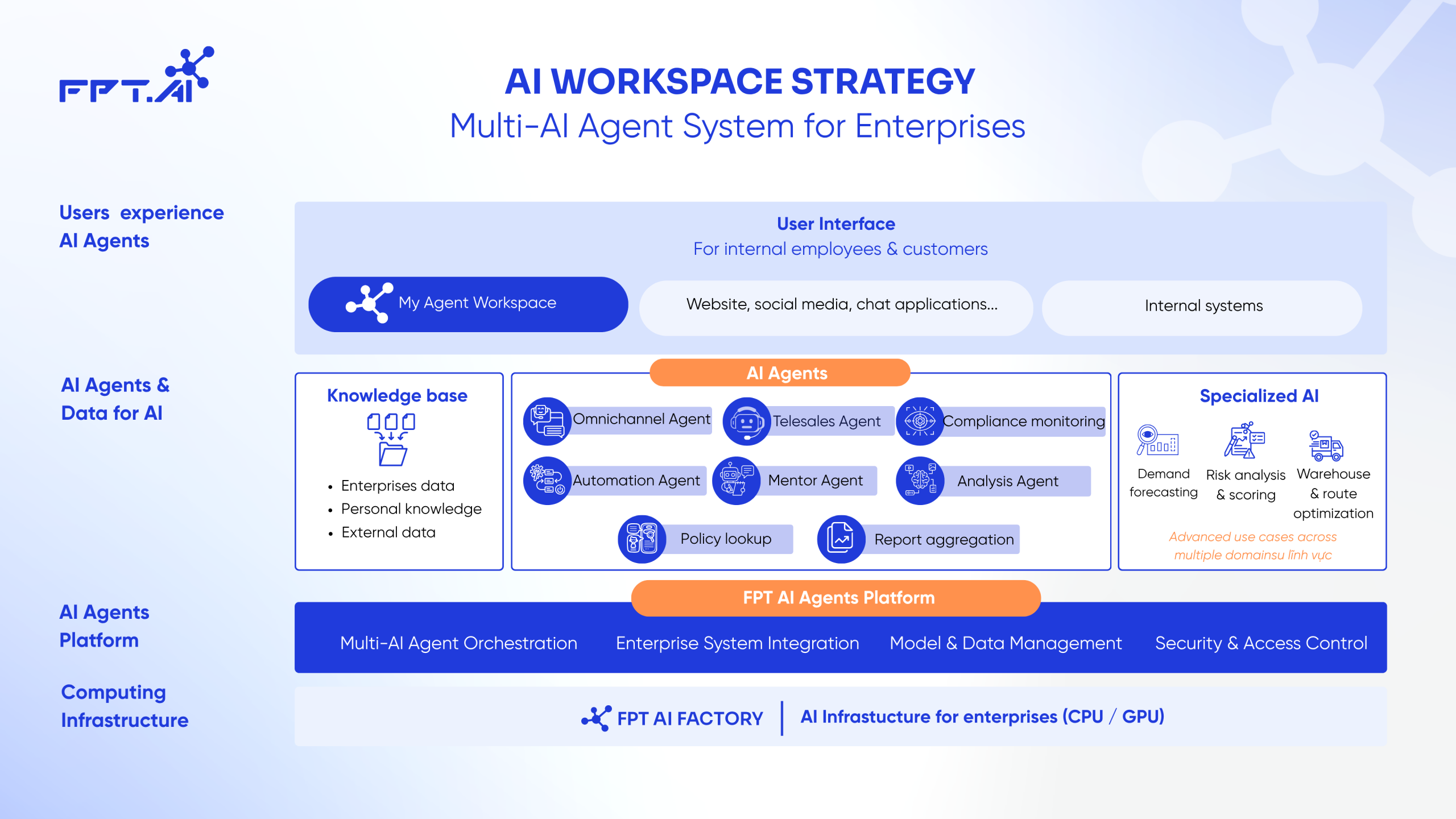
The user experience in AI Workspace is designed so that AI is present at every touchpoint. Users can interact with AI Agents through a dedicated workspace, websites, social media, messaging applications, or directly within internal systems. This allows AI to transcend a single interface and become a seamless capability layer across the entire working and customer interaction journey.
At the core of AI Workspace is a multi-agent system, where each AI Agent is assigned a clear role and responsibility—from omnichannel assistants, telesales, compliance monitoring, process automation, and internal training to demand analysis and report generation. The key value lies not only in the capability of each individual agent, but also in their ability to coordinate with one another, forming an increasingly intelligent and cohesive operational system over time.
The foundation of this entire system is data and knowledge. AI Workspace enables the integration and utilization of enterprise data, internal documents, and external data sources simultaneously. When data is standardized and centralized, AI goes beyond simple responses—it gains contextual understanding, allowing it to provide more accurate and relevant support aligned with real business operations.
Beyond general support tasks, AI Workspace also enables the deployment of specialized AI solutions tailored to specific business challenges. Applications such as demand forecasting, risk analysis and scoring, and supply chain optimization bring AI closer to participating in decision-making processes. This marks a significant shift—from helping businesses “do things faster” to helping them “do things right.”
To ensure the ecosystem operates effectively, a central orchestration platform is indispensable. This platform manages and coordinates multiple AI Agents simultaneously, integrates with existing enterprise systems, and controls models, data, and security elements. As a result, businesses can scale AI strategically rather than through fragmented and hard-to-manage deployments.
Underlying everything is a dedicated computing infrastructure. Powered by FPT AI Factory, this infrastructure ensures the capability to process large volumes of data at high speed with the stability required for enterprise environments. This is what enables AI to move beyond small-scale experiments and into large-scale, mission-critical implementations.
Use Case: Customer Service and Employee Training Powered by AI Agents
Scenario:
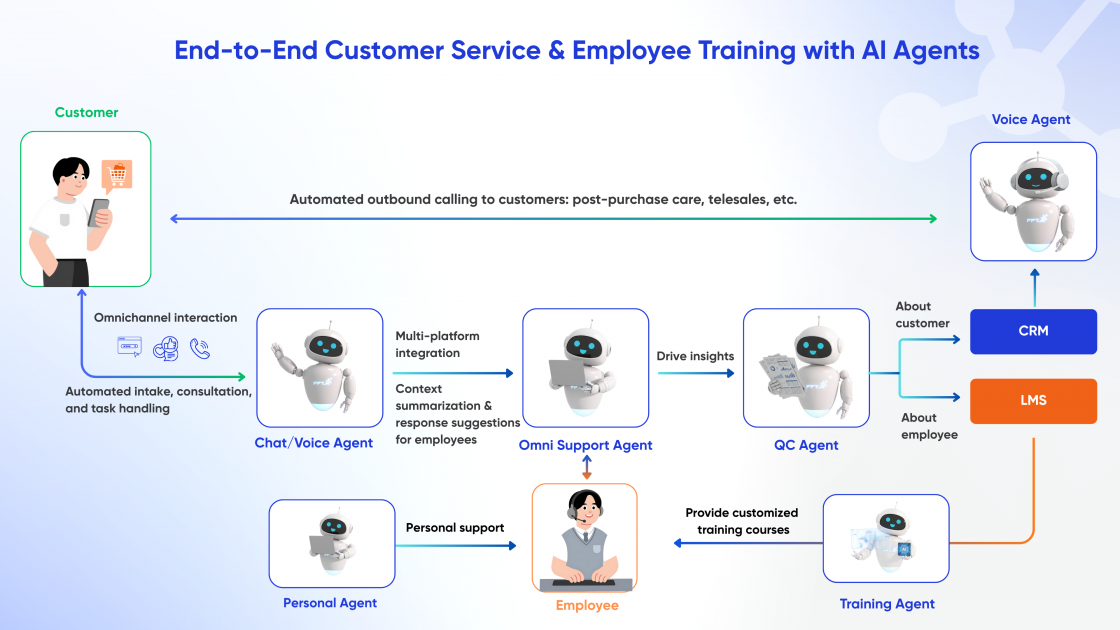
Customer A visits the website of TechMart (hypothetical) with the intent to purchase a tech product. From the very beginning of the journey, the customer interacts with an AI Chat Agent on the website. This agent goes beyond answering basic questions—it proactively gathers additional information to understand the customer’s needs, budget, and usage purposes. Once sufficient context is collected, the AI Chat Agent transfers the entire conversation to a customer service (CS) representative for further handling.
At this stage, the CS representative is not working alone but is supported by internal AI Agents. Based on the prior conversation data, these AI systems suggest appropriate responses, recommend consultation scripts, and assist in order creation more quickly and accurately. As a result, the consultation process becomes smoother, more personalized, and significantly faster.
After the order is created, an AI Enhance Agent reviews the entire interaction between the customer and the CS representative. The system then extracts two layers of insights: customer insights (behavior, needs, level of interest) and performance insights (how effectively the CS representative handled the interaction). These insights are then routed to two key internal systems: CRM and the training system.
On the CRM side, customer insights are used to activate AI Voice Agents. These agents automatically make follow-up calls to Customer A to assess post-purchase satisfaction, while also tactfully executing upsell or cross-sell activities based on previously analyzed needs.
Meanwhile, internally, the LMS system receives performance insights about the CS representative. This data is passed on to AI Mentors—“digital coaches” capable of personalizing training content. Based on each employee’s strengths and areas for improvement, AI Mentors recommend tailored learning programs, helping continuously enhance skills and service quality over time.
This entire journey demonstrates how five AI Agents work seamlessly together—not only to deliver better customer experiences but also to continuously optimize operations and develop internal capabilities.
Conclusion
AI Workspace represents a major shift in how enterprises approach AI. From isolated applications, AI evolves into a unified ecosystem; from a supporting role, it becomes an integral part of operations; and from initial experimentation, it grows into a core capability. In the long-term AI race, organizations that build a well-structured AI Workspace will gain a clear advantage in speed, efficiency, and adaptability for the future.
From demand forecasting in retail to fraud detection in banking and content creation in marketing, AI is being applied across industries to solve targeted, well-defined use cases. But at the enterprise level, a critical question emerges: can these AI systems truly work together?
When each AI system is implemented for a separate purpose, optimization often remains local. Data becomes fragmented, workflows are disconnected, and the value created is difficult to compound. This leads to a familiar state for many organizations: plenty of AI, but no unified AI system.
And that is the key boundary between applying AI to individual problems and building an ecosystem of AI Agents that can collaborate, share context, and operate as a cohesive whole.
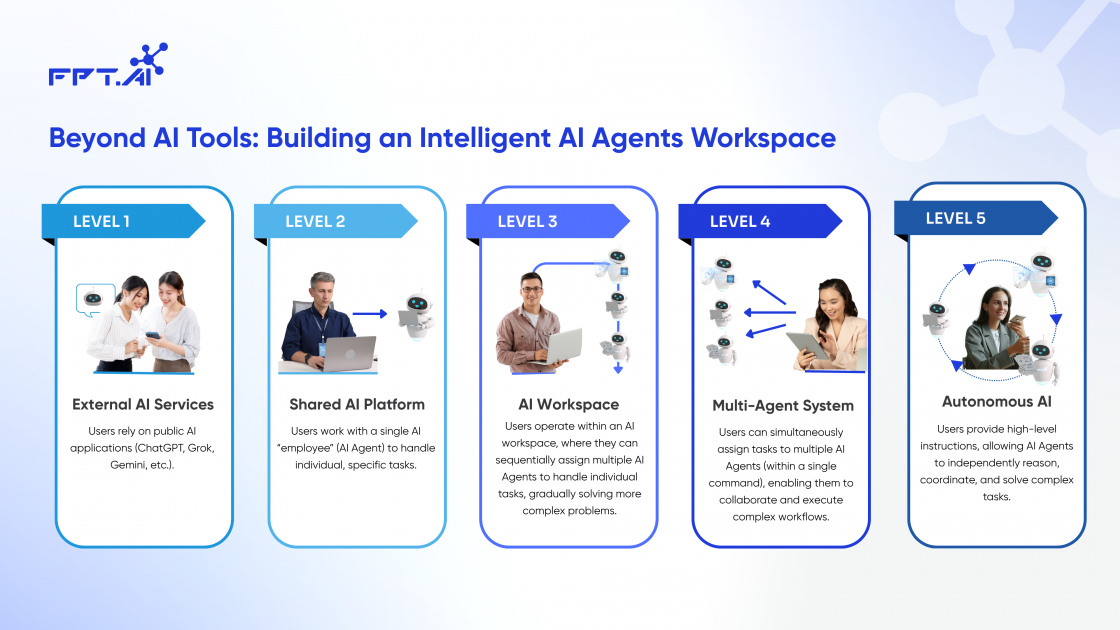
In the early stages, AI is typically deployed as standalone tools for specific needs such as content creation, data analysis, or customer support. From a technical perspective, this model relies on APIs or off-the-shelf platforms without deep integration into core systems. This allows businesses to experiment quickly with low cost and fast deployment. However, from a business standpoint, the value remains limited: data is fragmented, processes are inconsistent, and ROI is difficult to measure clearly.
As AI adoption grows, organizations begin to standardize by implementing a shared AI Agent. Essentially, this serves as an intermediary layer that can understand context, access internal data, and support multiple tasks. Technically, this model often combines large language models (LLMs), knowledge bases, and basic workflows. Business benefits become more evident: reduced processing time, improved employee experience, and a unified AI access point. However, limitations persist in sequential processing and the lack of deep scalability across complex workflows.
A major shift occurs when organizations build an AI Workspace – a collaborative environment where humans and multiple AI Agents interact. This is not just an interface, but an integrated architecture where different AI capabilities can be invoked based on specific roles. Technically, AI Workspace requires orchestration capabilities, multi-session context management, and integration with enterprise systems such as CRM, ERP, and data warehouses. From a business perspective, this marks a turning point where AI begins to participate in end-to-end processes rather than isolated tasks, significantly improving productivity and consistency.
However, AI Workspace is not the final destination. The greatest value is unlocked when organizations move toward a multi-agent model. At this stage, each AI Agent is designed with a specialized role—such as data analysis, planning, quality assurance, or customer interaction. These agents do not operate in isolation; they collaborate, exchange information, and work together to solve complex problems.
From a technical standpoint, this represents a shift from a single-agent system to a multi-agent system, requiring components such as:
- Task decomposition to break down complex requests into smaller tasks
- Agent communication protocols to enable interaction between agents
- A central orchestrator or decentralized coordination model
- Evaluation and feedback loops to monitor and improve outcomes
From a business perspective, this model drives structural transformation. Organizations not only enhance individual productivity but also optimize the entire value chain. A complex request, such as launching a marketing campaign, can be handled almost entirely by an “AI team,” from market research and messaging to content execution. This reduces operational costs, shortens time-to-market, and enables large-scale experimentation.
At the highest level, systems evolve toward Autonomous AI—where AI Agents can reason, make decisions, and collaborate with minimal human intervention. Technically, this involves advanced reasoning models, reinforcement learning, and tight integration with real-time data. From a business perspective, this lays the foundation for the concept of a “self-operating enterprise,” where human roles shift from execution to supervision and strategic direction.
However, reaching this level requires overcoming significant challenges. Data must be standardized and cleaned to ensure accuracy. Technology infrastructure must be flexible enough to integrate and scale. At the same time, security, risk management, and compliance become increasingly critical. Equally important is the human factor, as organizations need to shift their mindset from “using tools” to “managing a digital workforce.”
Overall, the journey from standalone AI applications to an ecosystem of AI Agents is an evolution across different levels of maturity. Each step requires not only technological investment but also a transformation in how businesses design processes and measure performance. Organizations that move faster along this journey will not only reduce costs but also build sustainable competitive advantages in a world where speed and adaptability are decisive.
In this context, the key question is no longer “What can AI do?” but “How should organizations restructure their operations to fully leverage an AI ecosystem that can collaborate, share context, and operate as a unified system?”
Explore more about FPT AI Agents: https://fpt.ai/products/fpt-ai-agents/
On the morning of April 10, the Exclusive AI Talk 2026 event took place, offering a comprehensive yet highly practical view of how AI is reshaping the workplace within enterprises. Moving beyond trend-driven discussions, the sessions went straight to the core challenge many organizations are facing: how to transform AI from a “technological promise” into a “real operational capability.
The AI race is accelerating
One of the most notable takeaways is the growing market pressure forcing businesses to act. According to Gartner and The Wall Street Journal, global AI investment is projected to reach approximately $2.5 trillion, while 68% of CEOs plan to continue increasing their AI spending in 2026, signaling that AI is no longer an experimental option, but a strategic priority.
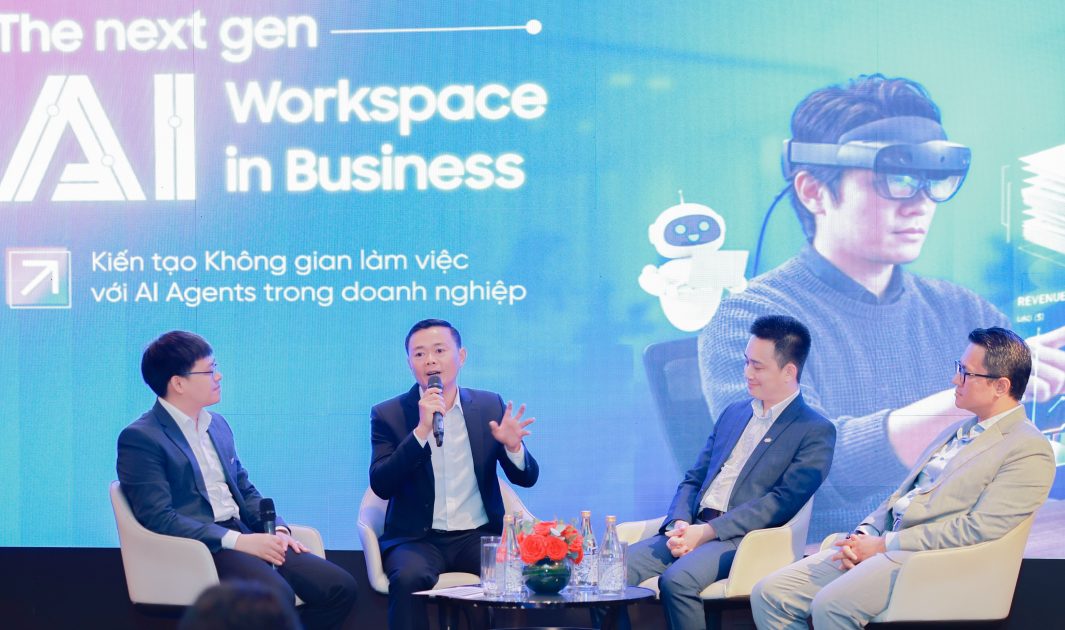
Beyond expectations, AI is already proving its real-world value at a global scale. Since the launch of ChatGPT in late 2022, AI-related stocks have contributed around 75% of the total gains of the S&P 500, 80% of earnings growth, and 90% of capital expenditure growth. This underscores that AI is not just a technology wave, but a direct driver of operational efficiency and profit margins for businesses.
In this context, AI is creating a clear compounding effect. Mr. Nguyen Quoc Tuan, CEO of ScaleUP, noted that early adopters will continue to build advantages over time, while frontrunners accelerate further ahead of the rest. This is also why AI is seen as a long-term game—where companies that wait until ROI becomes fully clear before acting risk falling behind. In such cases, the cost of delay is not just missing opportunities, but can even exceed the initial investment required to implement AI early on.
From fragmented tools to an AI Workspace – a strategic shift for enterprises
At the event, Mr. Nguyen Quang Minh – Director of the AI Consulting and Innovation Center (AI Lab) at FPT Smart Cloud, FPT Corporation – outlined a typical “evolution” journey in how enterprises adopt AI. It often begins with the fragmented, individual use of public AI tools. This is followed by a phase where organizations deploy standalone AI Agents, functioning as “digital workers” for specific tasks.
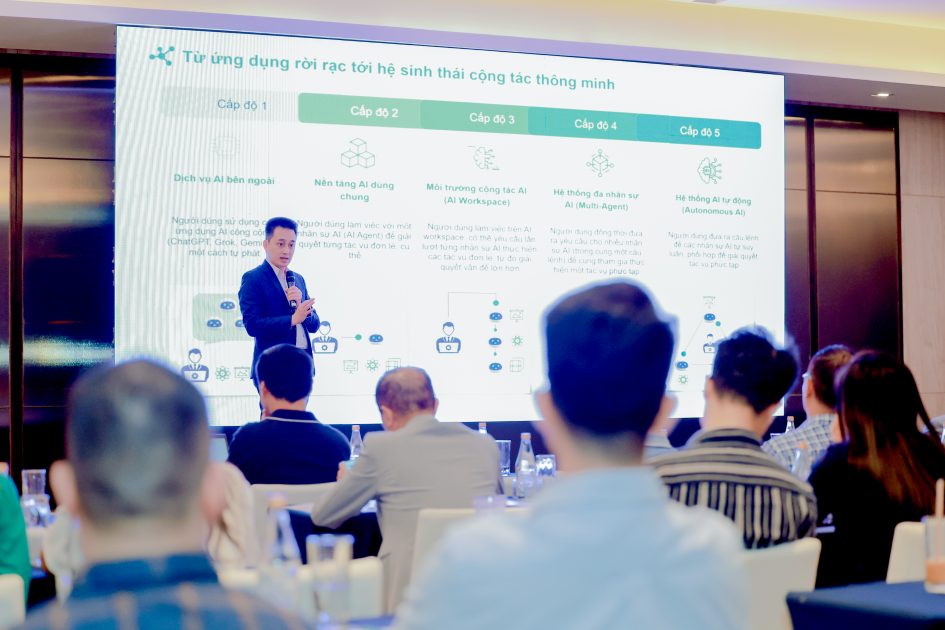
However, real value only begins to scale when enterprises transition to an AI Workspace model where multiple AI Agents can collaborate to solve more complex problems. At a more advanced level, multi-agent and autonomous AI models enable systems not only to execute tasks but also to reason, allocate work, and coordinate with one another toward shared goals.
This shift is not merely a technological upgrade, but a fundamental transformation in how businesses operate.
When AI becomes a new “workforce” within the enterprise
A key insight from the event is that AI is increasingly taking on the characteristics of a “worker” rather than just a tool. It can perform tasks, collaborate, and even make decisions in certain contexts. However, most organizations today still manage AI as an IT system, rather than as part of their organizational structure. This disconnect is a major bottleneck, preventing many well-funded AI initiatives from delivering proportional impact. In other words, companies are “using AI,” but not yet “operating with AI.”
Experts at the event emphasized that to bridge the gap between investment and outcomes, businesses need a more holistic approach. According to BCG, three pillars determine AI success: algorithms, technical infrastructure, and people–organization–process. Among these, the last is often the biggest constraint. AI does not fail because it lacks intelligence, but because it is deployed in systems that are not ready to absorb it. When data is unrefined, processes are not standardized, and people are unprepared, AI risks becoming an added layer of complexity rather than a driver of efficiency.
Vietnam’s challenge: Strong potential, but a lack of high-impact use cases
According to Mr. Nguyen Duc Hanh, CIO of Thien Long Group, the situation in Vietnam clearly reflects this gap. While interest and investment in AI are rapidly increasing, applications that directly impact revenue, cost efficiency, and operational speed remain limited. This highlights a significant gap—but also a major opportunity. Enterprises that move early in building high-impact use cases will gain a clear competitive advantage in the coming years.
From an implementation perspective, a practical approach highlighted at the event is to start with small but high-impact use cases—where outcomes can be clearly measured. This not only helps mitigate risks but also builds internal confidence to scale AI initiatives further.
At the same time, clearly defining objectives, selecting the right tools and partners, and ensuring clean, ready-to-use data are critical prerequisites. More importantly, organizations must be willing to adapt their processes to work effectively with AI, rather than holding on to legacy ways of working. Incorporating AI-related KPIs into performance evaluations and preparing dedicated teams for post-deployment operations are no longer optional—they are quickly becoming the new standard.
From “using AI” to “implementing AI effectively.”
In closing, a clear message emerged: in a landscape where trillions of dollars are being invested in AI but results remain uneven, the advantage will not belong to those who invest the most, but to those who understand and implement it effectively.
From this perspective, AI Workspace is not just a technology trend, but a new operating model—one where humans and “digital workers” collaborate to create real business value.
TERMS AND CONDITIONS OF USE
(03-2026/CS/PDP Version: 2.0) The website of FPT Smart Cloud Company Limited (“FPT Smart Cloud”, “We”, “Us”) is provided to all users worldwide. FPT Smart Cloud creates and maintains this website solely for informational purposes. By using this website, you are deemed to have accepted and agreed to comply with these terms and conditions, as well as all applicable laws and regulations. You agree not to disrupt or intentionally attempt to disrupt the operation of this website in any manner. You must not use this website if you do not accept these terms.
1. Limited License
- This website and all its content, including patents, copyrights, trademarks, and other intellectual property rights, are the property of FPT Smart Cloud and are protected by intellectual property laws worldwide.
- You agree to comply with all global intellectual property laws while using this website.
- FPT Smart Cloud does not grant any express or implied rights regarding patents, trademarks, copyrights, or trade secret information.
- You may not modify, copy, transmit, sell, or distribute all or part of this website, unless FPT Smart Cloud grants you a non-exclusive, non-commercial, and limited right to use it.
- You may not use any part or the entirety of this website to create part of a new website and/or use Internet links to create it without prior written consent from FPT Smart Cloud.
- Any software or other materials provided for download, access, or use from this website with their own separate terms, conditions, and license notices will be governed by those specific terms.
- Violation of any of these agreements will result in the automatic termination of all rights granted to you without prior notice.
- While FPT Smart Cloud prohibits such behavior and content on its website, you understand and agree that FPT Smart Cloud is not responsible for content posted on the website and that you may be exposed to such content.
- You are solely responsible for any content you create, transmit, or display while using the website and for the consequences of your actions (including any loss or damage that FPT Smart Cloud may suffer) in doing so.
2. Blog
The purpose of FPT Smart Cloud’s blogs is to share information with the community. We invite you to submit comments or posts for review. Before using the blog service, we must clarify the rights and responsibilities involved:
- When accessing, creating, or contributing to any blog hosted on this website, you must read and agree to these blog terms of use and the following terms, conditions, and policies, including any future amendments.
- FPT Smart Cloud reserves the right to remove any comment or user from the blog if they violate the terms and conditions listed below.
- You must accept and agree that all content posted on FPT Smart Cloud’s blog service is the sole responsibility of the individual who posted it.
- All opinions expressed by users on this website represent only their personal views and do not represent FPT Smart Cloud or its affiliates.
- Users are responsible for complying with the Personal Data Protection Law when posting any information related to other individuals on the Blog.
- You must not infringe or threaten to infringe upon intellectual property rights, such as trademarks or copyrights, of FPT Smart Cloud or any third party.
- You must not violate the legal rights or image rights of FPT Smart Cloud or any third party.
- You must not defame, abuse, harass, or discriminate against FPT Smart Cloud or any third party.
- You must not create a false identity to mislead others or impersonate a representative of another organization or FPT Smart Cloud to use this service.
- You must not post, publish, or upload illegal topics that could lead to or relate to crimes such as child prostitution, controlled chemical transactions, fraud, or bank account trading.
- You must not use profane, racist, or pornographic language.
- You must not upload files containing images, software, or other materials protected by intellectual property laws – including the use of AI to create deepfake content for fraudulent purposes- unless you own the rights or have received necessary consent.
- You must not organize contests or disseminate chain content.
- You must not post commercial content to promote services or products.
- You must not upload files containing viruses, code, or any programs that could damage or interfere with the operation of FPT Smart Cloud’s or other users’ computers.
- You must not distribute advertising information or spam contrary to FPT Smart Cloud’s regulations.
- FPT Smart Cloud reserves the right, at its sole discretion, to modify, monitor, delete, or edit any content you contribute.
- You must indemnify and hold FPT Smart Cloud harmless from any claims or losses incurred due to your violation of these terms.
3. Links to Other Websites
- You may not create links to any part of FPT Smart Cloud’s website or directly to this website from any other site unless granted written permission.
- FPT Smart Cloud may, at its sole discretion, terminate the right to link to this website at any time.
- This website contains links to other sites with their own terms of use; we do not control their content and are not responsible for any damage or loss incurred from using them.
- These links are provided solely for your convenience. FPT Smart Cloud does not imply endorsement of any third party or their products/services.
- You agree that we bear no direct or indirect responsibility for damages, losses, or costs arising from your reliance on or use of content, products, or services from linked websites.
- Use of such links and websites is entirely at your own risk.
4. Text Provided in Other Languages
FPT Smart Cloud provides some information in languages other than English. You must understand and agree that this information may be translated by humans or computer software without human review. Therefore, FPT Smart Cloud is not responsible for the accuracy or completeness of such translations.
5. Disclaimer of Warranty
YOU UNDERSTAND THAT THE USE OF THIS WEBSITE IS YOUR SOLE RESPONSIBILITY. ALL INFORMATION, INSTRUCTIONS, SOFTWARE, PRODUCTS, PROGRAMS, AND SERVICES ARE PROVIDED ON AN “AS IS” BASIS. THE WEBSITE IS PROVIDED AS A FREE PUBLIC RESOURCE WITHOUT ANY WARRANTIES, EXPRESS OR IMPLIED.
- To the maximum extent permitted by law, all warranties of fitness for a particular purpose or merchantability are disclaimed.
- FPT Smart Cloud does not guarantee that the website will be uninterrupted, timely, secure, or error-free.
- Content is for informational purposes only and should not be construed as technical advice.
- FPT Smart Cloud is not responsible for updating the website to keep information current or ensuring its accuracy or completeness.
6. Limitation of Liability
YOU AGREE THAT YOU USE THE WEBSITE AT YOUR OWN DISCRETION AND RISK. UNDER NO CIRCUMSTANCES SHALL FPT SMART CLOUD OR ITS AFFILIATES BE LIABLE FOR ANY DAMAGES OR LOSSES (INCLUDING DIRECT, INDIRECT, SPECIAL, OR INCIDENTAL DAMAGES) ARISING FROM THE USE OF OUR WEBSITE. By using our website, you assume full responsibility for:
- Any loss or damage caused by your actions, errors, or negligence, or circumstances beyond control.
- Any errors, omissions, or inaccuracies in information, or delays in providing information.
- Any downloads or materials obtained that result in data loss or damage to your computer system.
- You commit to indemnifying FPT Smart Cloud against any liability, loss, or legal costs (including legal fees) arising from your failure to comply with these terms.
- To the maximum extent permitted by law, FPT Smart Cloud’s total liability shall not exceed the service fees you have paid, unless otherwise provided by law.
7. Violation & Termination of Service
If you violate any applicable laws, these Terms of Use, or related Privacy Statements, FPT Smart Cloud reserves the right to suspend or terminate your access and licenses at its sole discretion.
8. Choice of Law
These Terms of Use shall be governed by and construed in accordance with the laws of the Socialist Republic of Vietnam. Any claims or legal proceedings arising from these terms shall be brought exclusively in Vietnam.
9. Privacy Policy
Please read our Privacy Statement, which is referenced and incorporated into this document.
10. Changes to Terms of Use
FPT Smart Cloud reserves the right to modify or terminate this service at any time without prior notice. You are responsible for regularly reviewing these terms. Your continued use of the website constitutes agreement to all such terms.
11. Copyright Notice
© 2025 FPT Smart Cloud Co., Ltd. All rights reserved.
- FPT Smart Cloud respects intellectual property rights and expects you to do the same.
- This website is for informational purposes only and is not legal advice. If you need legal advice, contact a lawyer.
- The use of automated tools (Bots, Crawlers, AI Scrapers) to collect data for commercial purposes or for training Large Language Models (LLM) is strictly prohibited without prior written consent.
DATA SUBJECT RIGHTS POLICY
(Reference No.: 02-2026/CS/PDP – Version 1.0)
1. Introduction
FPT Smart Cloud Company Limited (“FPT Smart Cloud”, “we”, “us”, or “our”) is committed to fully respecting and protecting the lawful rights of Personal data subject matters (or Data subjects) in accordance with Vietnamese laws on Personal data protection.
This page is designed to provide customers, partners, and users with a transparent, comprehensive, and structured overview of:
- Their rights relating to personal data;
- How to exercise those rights;
- The process for receiving, verifying, and handling requests at FPT Smart Cloud.
The exercise of these rights is carried out based on the principles of transparency, security, timeliness, and compliance with applicable laws.
2. Personal data subject matters (or Data subject) rights
In accordance with applicable laws, data subjects are entitled to the following rights:
2.1. Right to be informed
Data subjects have the right to request information regarding the processing of their personal data, including but not limited to:
- Purpose of processing;
- Categories of personal data collected;
- Processing methods;
- Retention period;
- Relevant parties involved in processing.
2.2. Right to consent and withdraw consent
Data subjects have the right to decide whether to consent to the processing of their personal data.
They also have the right to withdraw their consent at any time.
Withdrawal of consent does not affect the lawfulness of processing carried out prior to such withdrawal.
2.3. Right of access
Data subjects have the right to:
- Request confirmation as to whether their personal data is being processed;
- Access their personal data;
- Request a copy of personal data under processing, except where otherwise provided by law.
2.4. Right to rectification
Where personal data is inaccurate, incomplete, or outdated, data subjects have the right to request updates, corrections, or supplementation to ensure accuracy and completeness.
2.5. Right to erasure
Data subjects have the right to request deletion of personal data in accordance with applicable laws, including but not limited to cases where:
- The data is no longer necessary for the processing purpose;
- Consent has been withdrawn and no other legal basis exists for processing.
2.6. Right to restrict processing
In certain circumstances, data subjects may request restriction of processing, for example:
- When there is a dispute regarding data accuracy;
- When there are concerns about the lawfulness of processing.
2.7. Right to object to processing
Data subjects have the right to object to the processing of their personal data where:
- Processing is conducted for marketing purposes; or
- Processing is based on legitimate interests of FPT Smart Cloud,
unless there are overriding legal grounds.
2.8. Right to complaint, denunciation, and legal action
Where data subjects believe their lawful rights and interests have been infringed, they have the right to:
- Lodge complaints with competent authorities;
- Seek compensation for damages;
- Initiate legal proceedings in accordance with applicable laws.
3. How to submit a request
Data subjects may exercise their rights by submitting a request through the following channels:
- Email: support@fptcloud.com
- Hotline: 1900 638 399
- Postal mail:
FPT Smart Cloud Company Limited
No. 10 Pham Van Bach Street, Cau Giay Ward, Hanoi, Vietnam
To ensure accurate and timely processing, requests should include:
- Identification information (full name, contact details);
- Specific request details;
- Supporting documents or information (if necessary for verification).
4. Identity verification
To ensure the security and confidentiality of personal data, FPT Smart Cloud may request additional information or documentation to verify the identity of the requester before processing the request.
Verification will be conducted in a manner that is appropriate, necessary, and proportionate to the purpose.
5. Request processing time
FPT Smart Cloud commits to handling requests within the timeframes required by applicable laws.
Specifically:
- Acknowledgment of receipt will be provided as soon as possible, typically within 72 hours of receiving a valid request;
- Processing time depends on the nature and complexity of the request;
- Where an extension is required, we will inform the requester of the reason and expected timeline.
6. Processing fees
The exercise of data subject rights is generally provided free of charge.
However, in cases where requests are:
- Repetitive;
- Unreasonable; or
- Resource-intensive,
FPT Smart Cloud may charge a reasonable fee in accordance with applicable laws and will notify the requester in advance.
7. Grounds for refusal
FPT Smart Cloud may refuse to process a request in the following cases:
- Inability to verify the identity of the requester;
- Requests that are unclear, incomplete, or invalid;
- Requests that may adversely affect the lawful rights and interests of third parties;
- Other cases as provided by law.
In all cases of refusal, we will clearly inform the requester of the reasons.
8. Confidentiality of Requests
All information related to data subject requests will be handled and stored securely and used solely for the purposes of receiving, verifying, and processing the request in accordance with applicable laws.
9. Contact Information
For any requests or inquiries regarding data subject rights, please contact:
Data Protection Officer (DPO)
FPT Smart Cloud Company Limited
Address: No. 10 Pham Van Bach Street, Cau Giay Ward, Hanoi, Vietnam
Email: Minhpt@fpt.com
Phone: 0913571357
Hotline: 1900638399
10. Updates
This page may be updated from time to time to ensure compliance with legal requirements and operational practices.
The latest version will be published on our website and will take effect from the date of publication.