vi
 en
 ja



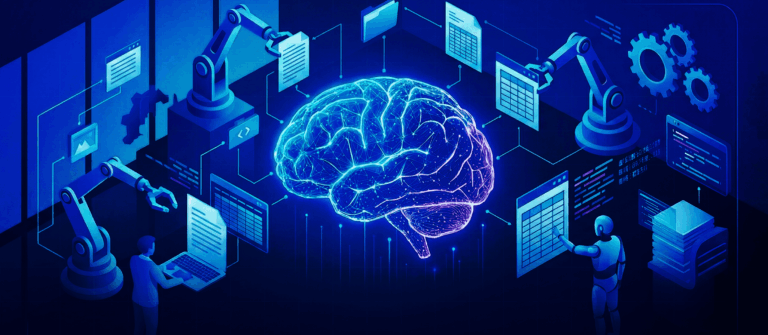
AI is evolving from a tool that assists individuals with specific tasks into an integral part of enterprise operations. Beyond searching for information, generating content, or answering questions, AI can now understand objectives, plan actions, use tools, and execute multi-step tasks.
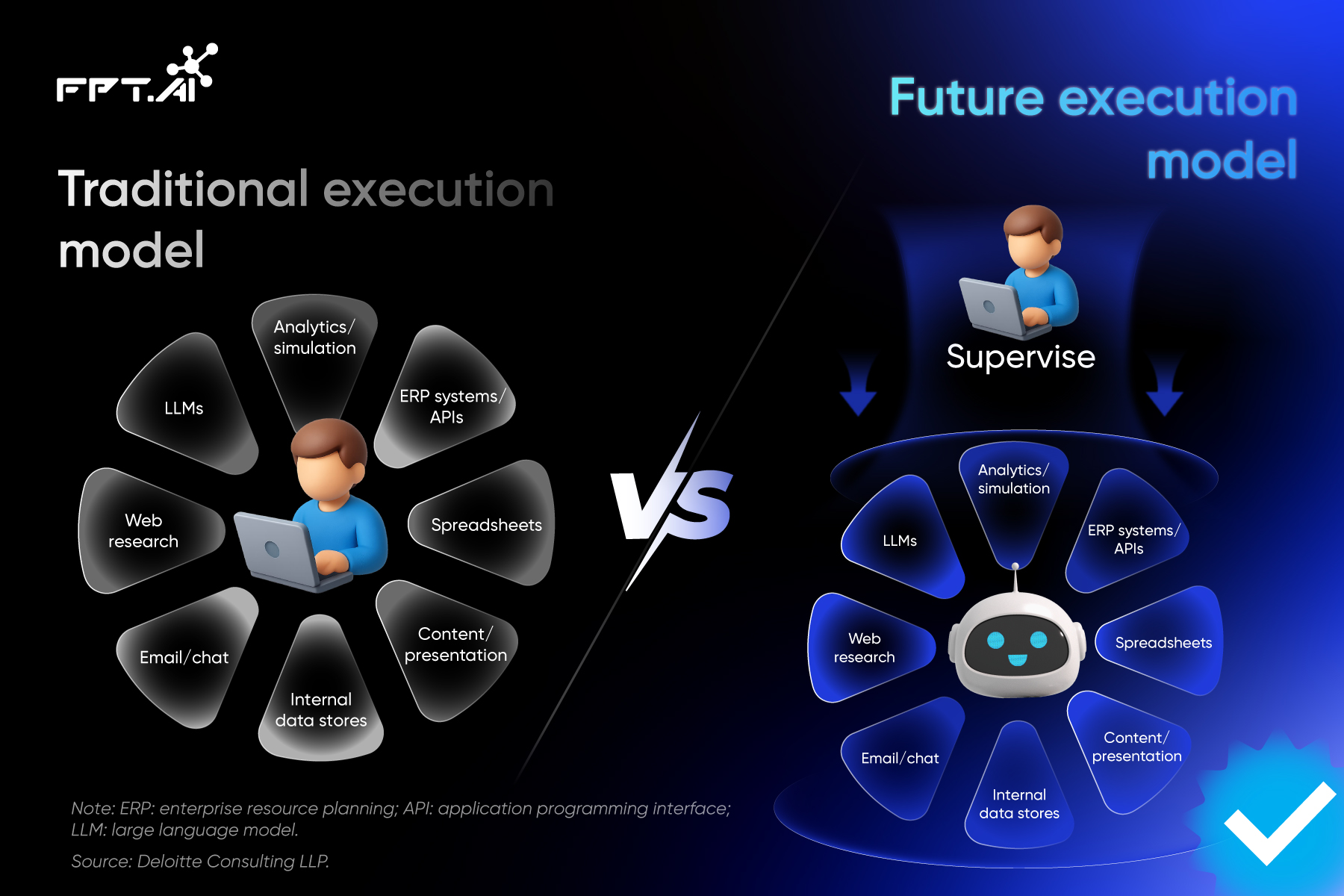
These capabilities enable businesses to organize AI into specific business roles, forming a Digital Worker workforce that collaborates with employees to carry out tasks under human supervision. However, putting this workforce into operation requires more than AI systems capable of executing individual tasks. It also involves defining roles, connecting enterprise systems, and managing operational activities.
Digital Workers: The Next Evolution of AI Agents
An AI Agent is an AI-powered system capable of understanding objectives, planning, and executing a sequence of actions to achieve desired outcomes. Agents can retrieve data, use tools, and interact with other systems.
A Digital Worker, on the other hand, is a defined business role built on the capabilities of one or more AI Agents, combined with specific knowledge, tools, workflows, and permissions.
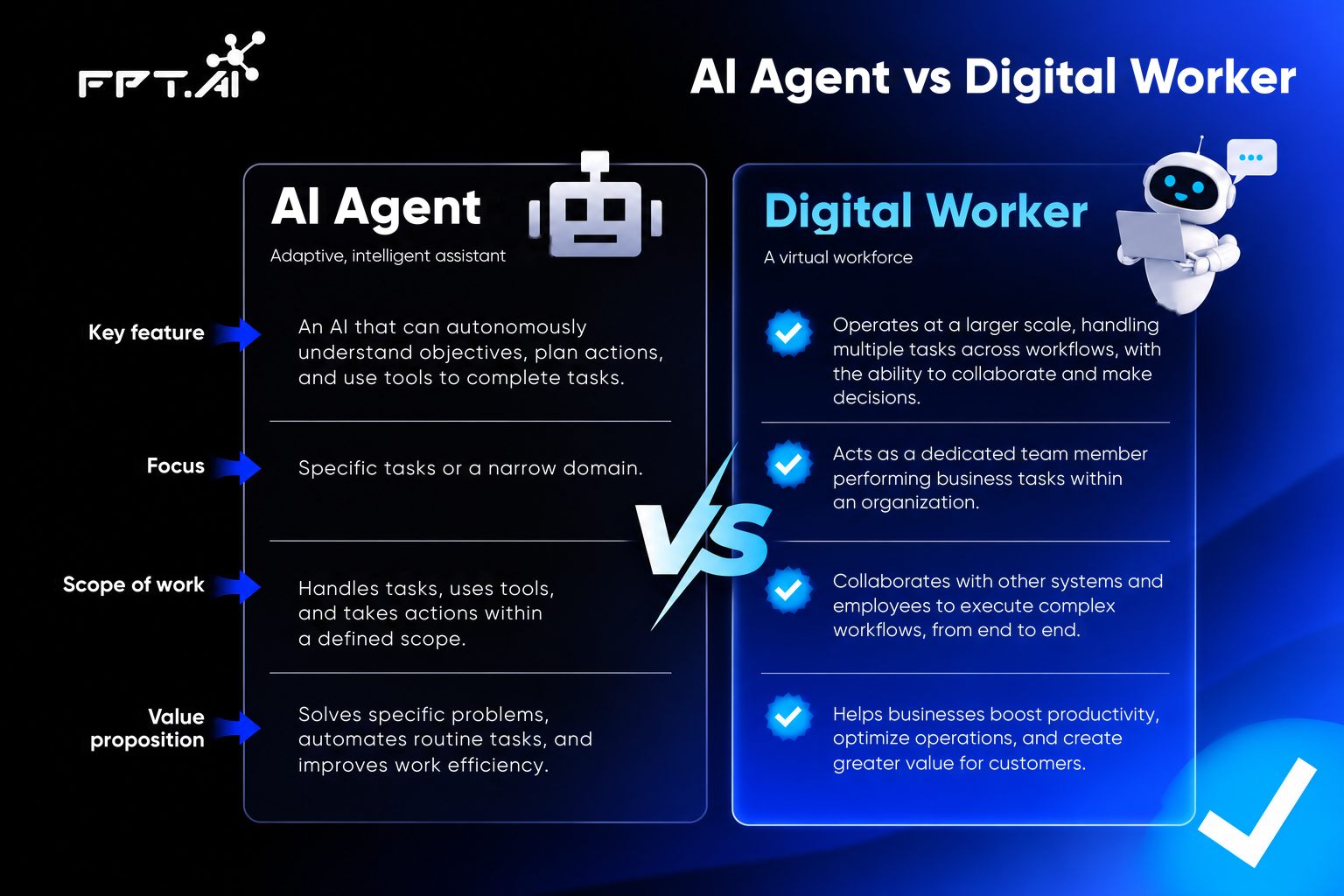
For example, an AI Agent may help a sales representative look up product information or draft a quotation. A Digital Worker responsible for the quotation process, however, can handle multiple stages: receiving customer requests, gathering relevant information, preparing quotations, tracking customer responses, and escalating complex cases to human employees.
In this sense, an AI Agent represents a technological capability, while a Digital Worker represents how businesses organize and apply that capability within their operations. Rather than automating isolated tasks, enterprises can build a digital workforce that participates in end-to-end business processes.
How Are Businesses Applying Digital Workers?
Digital Workers can take on different roles depending on an organization’s business requirements and operational workflows. Instead of handling isolated tasks, they can connect multiple steps in a process, retrieve data from internal systems, and collaborate with employees to complete business workflows.
A growing number of companies have successfully integrated Digital Workers into their business operations:
1. Banking: BNY – Digital Workers for International Payment Processing
BNY (The Bank of New York Mellon) has deployed nearly 140 Digital Workers on its internal AI platform, Eliza, to address issues arising in international payment processing. These Workers can read beneficiary information, identify geographic locations, verify country codes, and suggest corrections to incomplete or inaccurate payment instructions before submitting them for human confirmation.
As a result, the time required to review a transaction has decreased from 5–6 minutes to under 30 seconds, while the number of payment-related investigations has fallen by nearly 80%.
2. Technology: LTM – Digital Workers in Cybersecurity Operations
LTM, a technology company with 87,000 employees across 47 countries, has deployed Digital Workers to support security incident analysis, information correlation, and incident prioritization. This enables its cybersecurity teams to respond more quickly to emerging threats.
With this approach, incident assignment time has been reduced to under five seconds, while threat containment time has dropped from hours to just minutes. A team of 160 specialists can now handle a 40% increase in workload.
3. Healthcare: Providence and IBM – Digital Workers for Recruitment Processes
Providence, one of the largest healthcare systems in the United States, partnered with IBM to develop RITA, a Digital Worker designed to support recruitment and internal workforce mobility.
Built on IBM’s platform, RITA connects human resource management systems and coordinates multiple steps, from creating recruitment requests and obtaining approvals to updating application statuses and facilitating employee transfers.
The implementation has reduced hiring managers’ administrative time by 90%, shortened the average time for employees to start new positions by 12 days, and lowered internal transfer costs by 60%.
Building and Operating Digital Workers with FPT AI EOS
To bring Digital Workers into real-world business operations, enterprises need more than a workforce capable of executing tasks. They also need an environment in which to configure roles, connect with enterprise systems, and control execution. Developed by FPT Corporation, FPT AI EOS provides a unified platform designed to help businesses build, operate, and govern their Digital Worker workforce.
1. Building Digital Worker Teams Around Business Functions
EOS organizes Digital Workers into three main categories: Process, Productivity, and Analytics. Each category serves a different purpose, ranging from executing multi-step workflows and assisting employees with daily tasks to analyzing data and recommending actions. Businesses can configure each Digital Worker according to its role, responsibilities, and operational scope.
This approach helps define what each Digital Worker is expected to do, which information sources it can use, and what actions it is authorized to perform. For example, a Digital Worker supporting sales operations can be equipped with product knowledge, sales policies, and access to tools for information retrieval and quotation preparation.
2. Orchestrating Workflows and Connecting Enterprise Systems
EOS provides an environment where Digital Workers can collaborate with one another, work alongside employees, and interact with enterprise systems. Through integrations with platforms such as CRM, ERP, HRIS, Outlook, and SharePoint, Digital Workers can retrieve and update data, as well as execute multiple business tasks across authorized systems.
For example, in a sales workflow, a Digital Worker can retrieve customer information, prepare quotations, draft emails, and prepare contracts for review by relevant departments. In recruitment, Digital Workers can receive CVs, schedule interviews, and update candidate records, allowing employees to focus on candidate assessment and selection.
3. Governing Workflows and Accumulating Knowledge
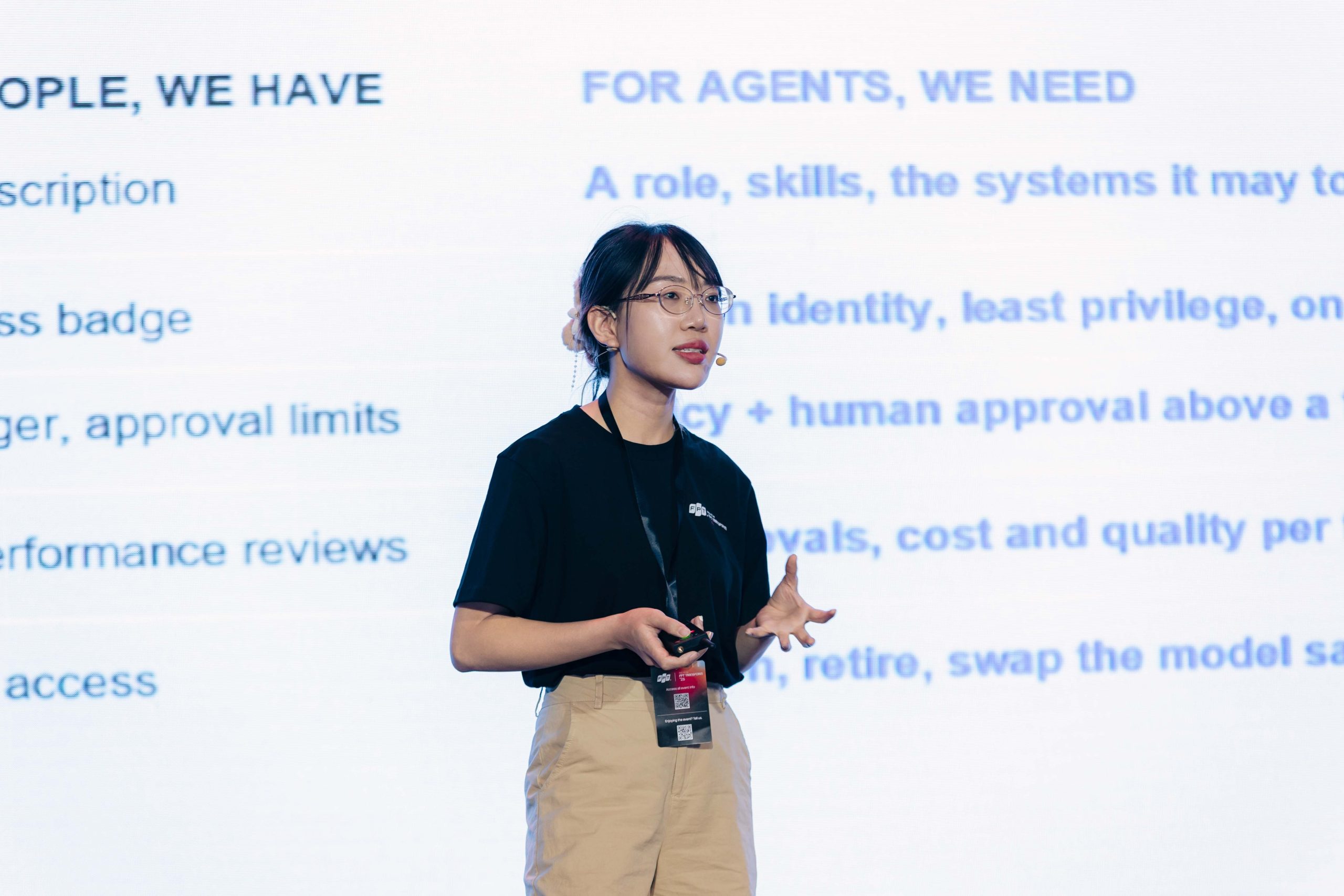
EOS provides a centralized governance layer for establishing policies, managing access permissions, controlling levels of autonomy, and monitoring Digital Worker activities. Its Human-in-the-Loop mechanism allows employees to review, confirm, or approve critical actions. Execution logs also help businesses track progress, evaluate performance, and review activity histories.
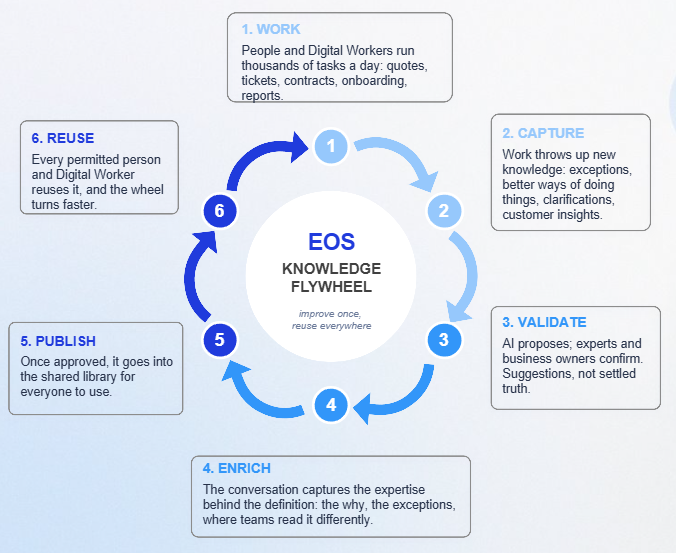
In addition to centralized governance, EOS supports the accumulation and reuse of business knowledge through its Knowledge Flywheel. Information generated or suggested by AI can be reviewed and validated by subject-matter experts before being added to a shared knowledge repository. This helps Digital Workers access and apply consistent knowledge across relevant workflows.
Through these three capability areas, FPT AI EOS provides an environment for enterprises to turn AI capabilities into defined business roles that can connect with operational systems and function within controlled boundaries. This lays the foundation for gradually integrating Digital Workers more deeply into enterprise operations.
Conclusion
Digital Workers are expanding how businesses apply AI, moving beyond task-level assistance toward direct participation in business processes. Real-world implementations demonstrate their potential to shorten processing times, reduce operating costs, and increase operational capacity across industries.
However, realizing these benefits requires enterprises to establish clearly defined roles, connect Digital Workers with business systems, and maintain appropriate human oversight.
With FPT AI EOS, businesses have a unified platform to organize, orchestrate, and govern their Digital Worker workforce, taking a gradual approach toward making AI an integral part of enterprise operations.