vi
vi
 en
en
 ja
ja



Over the past few years, the rise of generative AI has transformed how businesses search for information, create content, and automate workflows. Yet, despite the rapid advancement of AI models, most still face a fundamental limitation: AI does not fully understand the organizations they are designed to serve.
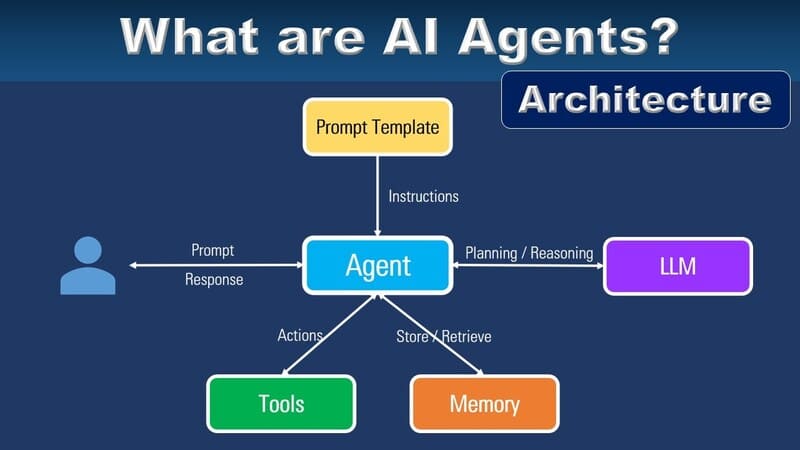
While a chatbot can answer questions using publicly available data, an AI agent can assist in solving complex tasks and automating workflows. However, when asked about internal processes, company-specific policies, customer records, or past business decisions, AI still lacks a comprehensive understanding of their organizations.
This is where Enterprise AI Memory becomes an important foundation for deploying AI effectively in enterprise environments.
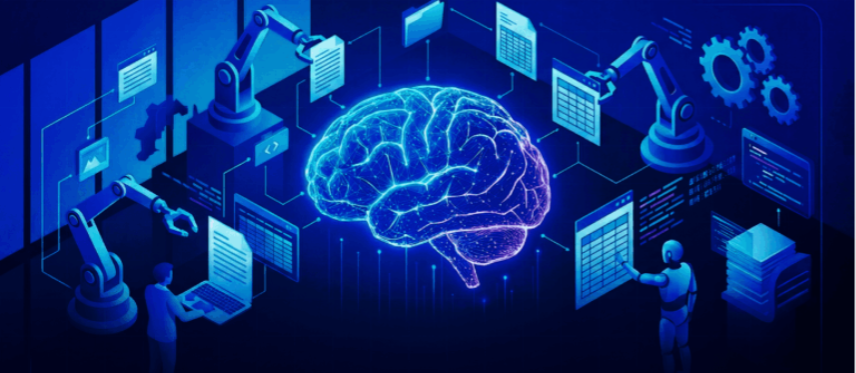
Image 1. Enterprise AI Memory preserves organizations’ knowledge into a unified memory system.
What Is Enterprise AI Memory?
Enterprise AI Memory is a system that stores, organizes, and connects an organization’s collective knowledge so that AI systems can retrieve, retain, and apply it whenever needed.
Unlike traditional systems that only store information, Enterprise AI Memory serves as an organization’s long-term memory, enabling AI to understand:
- Internal business processes and workflows.
- Company policies and compliance requirements.
- Customer interaction history.
- Domain expertise built over years of operations.
- Past decisions, institutional knowledge, and experiences.
In other words, Enterprise AI Memory enables AI to understand not only publicly available data but also the organization’s own institutional data.
When Business Data is Fragmented
Nowadays, enterprise knowledge is often spread across emails, CRM platforms, project management tools, internal knowledge bases, messaging applications, and countless other systems.
As organizations grow, so does the volume of information. Instead of becoming more valuable, that knowledge often becomes increasingly difficult to access. Employees spend hours searching for information, while departments continue operating within isolated data silos. More importantly, organizations risk losing valuable institutional knowledge when experienced employees leave.
In this environment, AI can only deliver meaningful business value if it is able to access, connect, and reason across these fragmented knowledge sources through a unified enterprise memory.
From AI Chatbots to AI Agents: Why Memory Matters More Than Ever
Early-generation chatbots primarily responded to a user’s current query. However, today’s AI agents can execute complex multi-step tasks, proactively recommend actions, collaborate with enterprise systems, and support decision-making.
To accomplish this, AI agents rely on far more than real-time data. They also depend on the ability to retain historical context and enterprise knowledge.
For example:
- A sales representative asks an AI assistant for the history of interactions with a customer. The AI needs to recall previous conversations, signed contracts, recent feedback, and pending action items.
- A customer service representative requests assistance in resolving a complaint. Rather than relying solely on the current conversation, the AI must understand the customer’s complete journey across multiple interactions.
As organizations deploy more AI agents across business functions, Enterprise AI Memory becomes the core foundation that enables these agents to operate consistently, intelligently, and with full organizational context.
Enterprise AI Memory as the Next Competitive Advantage
During the early stages of AI adoption, organizations that adopted AI early had a competitive advantage. However, as foundation models become increasingly powerful, widely available, and easier to adopt, the technology gap between businesses continues to narrow. Competitive differentiation will no longer depend on the AI model itself, but on the data and knowledge that AI can leverage.
Organizations with a well-developed Enterprise AI Memory will be able to:
Make faster, better-informed decisions:
By instantly retrieving information from multiple enterprise systems, AI enables leaders and employees to access the right knowledge at the right time.
Improve workforce productivity:
Employees no longer need to spend valuable time searching for documents or consulting colleagues. AI becomes a centralized knowledge gateway for the entire organization.
Reduce dependency on individual expertise:
Critical business knowledge is no longer confined to a handful of experienced employees. Instead, it becomes a shared organizational asset that remains accessible, even as employees join, leave, or change roles.
Enhance AI performance:
Organizations with a well-developed enterprise memory will receive responses that are significantly more accurate and more context-aware.
The Future of Enterprise AI: “The Digital Brain”
Soon, Enterprise AI Memory will evolve beyond a knowledge repository to become the coordination layer of organizations’ entire ecosystem of AI agents.
Every meeting, customer interaction, and newly created document will continuously enrich the organization’s memory. Over time, AI will learn from this expanding knowledge base, enabling it to provide increasingly intelligent and context-aware support.
Organizations will gradually build a “digital brain” capable of preserving, connecting, and leveraging their collective knowledge across every business function.
In the AI era, access to powerful language models is no longer a unique competitive advantage. Sustainable differentiation will come from an organization’s ability to transform its internal data and institutional knowledge into strategic assets that AI can effectively understand and leverage. Enterprise AI Memory provides the foundation that makes this possible.