vi
vi
 en
en
 ja
ja


When Talent Retention Becomes a Strategic Priority
In today’s rapidly evolving labor market, talent retention has become more than a human resource (HR) responsibility; it is now a strategic business priority. Rising recruitment costs, longer onboarding periods, and increasing competition for skilled professionals mean that each resignation can have a significant impact on business performance.
For years, organizations have invested in compensation, benefits, and employee engagement programs. While these initiatives remain important, they often address only the symptoms rather than the root causes of employee turnover. What organizations need is the ability to understand each employee’s journey, identify early signs of disengagement, and take timely action before employees decide to leave.
This is where AI is becoming an essential part of modern workforce management strategies.
Why Are Employees Leaving?
Employee turnover is rarely driven by a single factor. More often, it is the result of multiple issues that accumulate over time, including:
- Limited learning and development opportunities.
- Unclear career progression.
- Unbalanced workloads.
- Insufficient recognition from managers.
- Workplace experiences that fail to meet expectations.
- A weakening connection to the organization’s culture.
The challenge is that these warning signs often emerge long before an employee resigns. Yet, they can be difficult to detect if organizations rely solely on periodic surveys or one-on-one conversations.
Enabling Proactive Talent Retention with AI
AI can collect and analyze data from multiple sources, including HRM systems, learning management systems (LMS), performance metrics, employee surveys, and collaboration platforms to comprehend employee experience.
Rather than recording employee turnover after it occurs, AI enables organizations to identify retention risks at an early stage. For example, AI can detect employees whose engagement is steadily declining, who participate less frequently in training, whose performance begins to drop, or who repeatedly explore internal career opportunities without receiving a response. When several of these signals appear simultaneously, the system can alert managers and HR teams, enabling them to proactively engage employees, provide support, or adjust development plans.
As a result, organizations shift from reacting after losing talent to preventing talent loss before it happens.
Personalizing the Employee Experience at Scale
One of the greatest challenges organizations face today is delivering personalized employee experiences to hundreds, or even thousands, of employees simultaneously.
AI addresses this challenge by creating individualized development journeys for every employee.
Instead of delivering the same training program to everyone, AI can:
- Recommend learning courses based on each employee’s role and capabilities.
- Identify the skills needed to achieve individual career goals.
- Create personalized learning pathways.
- Provide real-time learning reminders and guidance.
- Recommend suitable internal mobility and career development opportunities.
This is the value that FPT AI Mentor delivers to organizations. FPT AI Mentor acts as an AI-powered companion throughout each employee’s professional development journey.
The platform analyzes an employee’s role, current competencies, career objectives, and learning progress to create personalized development pathways. Each employee receives tailored course recommendations, learning materials, and assessments aligned with their individual needs, making learning more practical, continuous, and relevant to day-to-day responsibilities.
Beyond personalized learning, FPT AI Mentor supports employees throughout the learning process by enabling knowledge retrieval, answering questions, recommending additional learning content, and providing reminders to help employees stay on track with their development goals. This gives employees access to an AI mentor that continuously supports and guides their professional growth.
From a management perspective, organizations gain real-time visibility into employee competencies, skill gaps, learning progress, and effectiveness of training programs. These insights enable more informed and proactive workforce development decisions.
When employees recognize that their organization is genuinely investing in their growth and provides a clear pathway for career advancement, their engagement and commitment increase significantly. Ultimately, this strengthens an organization’s ability to retain talent in the long term.
AI Agents: A New Companion for Employees
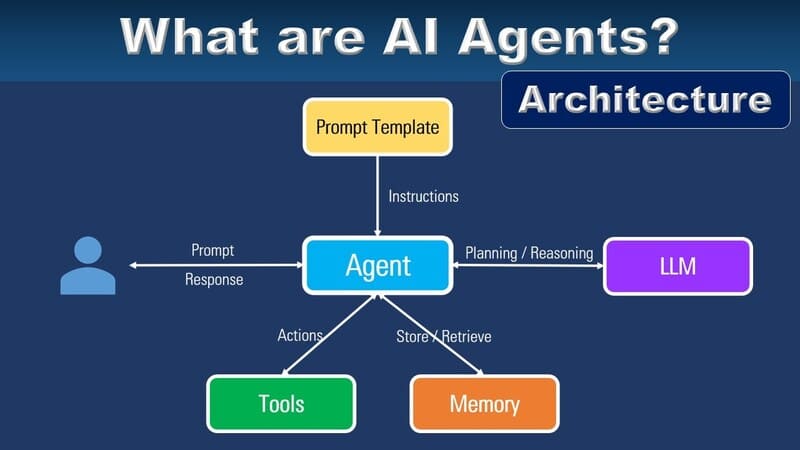
While FPT AI Mentor focuses on capability development and personalized learning, the next generation of AI agents extends AI’s role by supporting employees throughout their daily work.
Instead of searching across multiple systems, employees can directly interact with AI agents to:
- Access internal processes and company policies.
- Retrieve professional resources.
- Support new employee onboarding.
- Answer questions related to benefits, leave policies, and insurance.
- Assist with daily work tasks.
- Recommend the next steps in business workflows.
This not only saves time but also reduces the workload of HR teams and managers while creating a more seamless employee experience.
Data-Driven Decision-Making for Managers
One of AI’s greatest strengths is its ability to transform workforce data into actionable insights.
Rather than solely relying on monthly or quarterly turnover reports, managers can monitor real-time workforce indicators such as:
- Employee engagement across departments.
- Workforce trends and turnover patterns.
- Training program effectiveness.
- Learning pathway completion rates.
- Attrition risks across employee groups and job roles.
These insights enable organizations to allocate resources more effectively while evaluating how HR initiatives influence employee retention.
Human Empathy Remains Irreplaceable
Although AI can analyze workforce data with remarkable accuracy, employee retention remains a human challenge.
AI cannot replace genuine conversations between managers and employees, nor can it replace an organization’s culture, meaningful recognition, or a leader’s ability to inspire and build trust.
Instead, AI’s can provide insights, deliver early warnings, and recommend appropriate actions, empowering managers to make faster and better-informed decisions. Ultimately, the combination of intelligent technology and human empathy creates a sustainable employee experience.
Toward a Sustainable Organization
Now, talent retention is no longer simply about reducing employee turnover. It is about creating a workplace where every employee feels heard, supported, and empowered to grow.
From predicting attrition risks through workforce analytics and personalizing learning journeys with FPT AI Mentor to supporting employees in their daily work through AI agents, AI is reshaping how organizations design and deliver the employee experience.
When implemented effectively, AI improves workforce management while helping organizations build a more agile, engaged, and resilient workforce capable of sustaining long-term growth.